

National Honey Show
Thursday 23rd to Saturday 25th October 2025
This was our twelfth visit to the National Honey Show, which is a regular part of our microscopy outreach programme. It was held again at Sandown Park Racecourse in Esher in Surrey.
Quekett members Joan Bingley, Pam Hamer, Jonathan Palmer, John van Dyken and Alan Wood manned the Club’s stand in the Trade Hall, which is adjacent to the area where all of the entries for the Show are displayed. We had two tables this year, so we could show a good selection of specimens, microscopes and leaflets (the leaflets are available as free PDFs on our Downloads page). We also had a laptop computer with a rolling PowerPoint presentation.
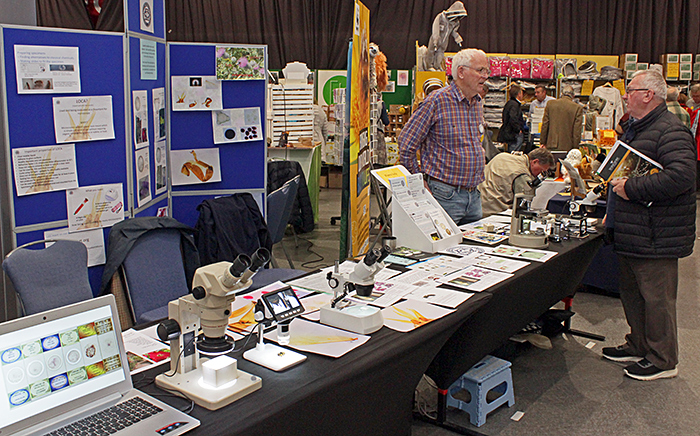 Quekett stand
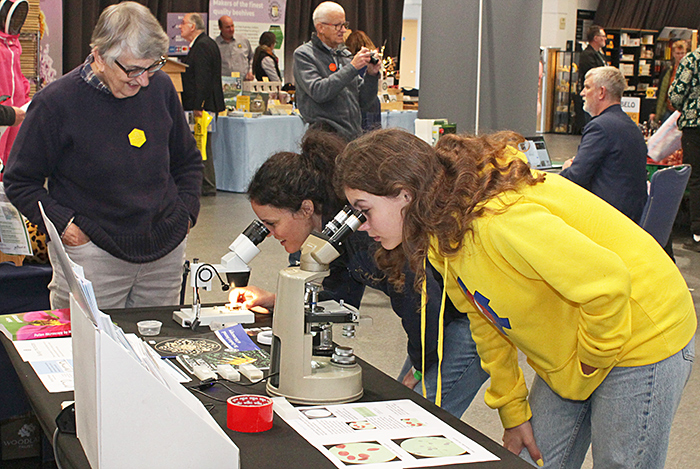 Pam Hamer with visitors
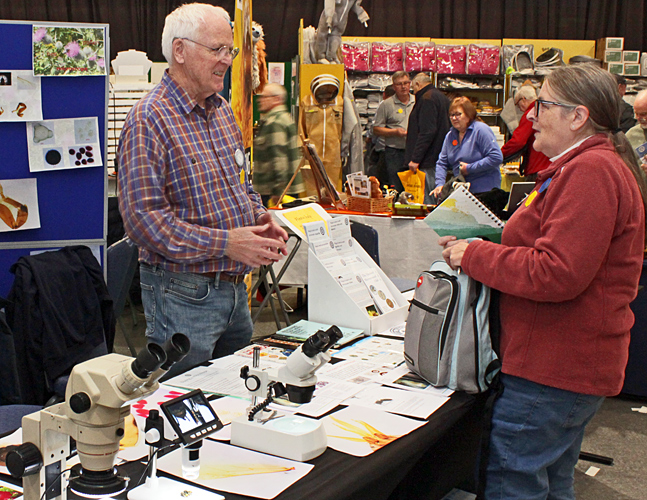 John van Dyken with a visitor
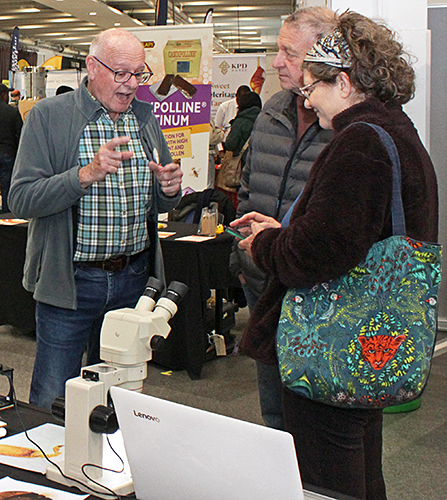 Jonathan Palmer with visitors
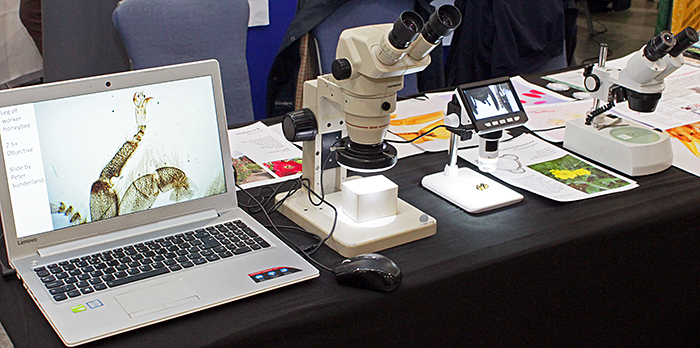 Stereo and digital microscopes
Pam Hamer brought her Vickers binocular compound microscope, recently fitted with an LED illuminator, for viewing slides of pollen (used microscopes like this can be found at reasonable prices). One eyepiece had a graticule so that we could explain how to measure pollen grains. She also brought a small Brunel MX1 stereomicroscope (10× and 30× magnifications when used with 10× eyepieces) for viewing slides of honeybee anatomy. The MX1 does not have built-in illumination, so Pam used a flexible Ikea Jansjö USB LED lamp connected to a powerbank. She also brought a digital microscope with built-in screen, a Natural History Museum Pocket Microscope, and some magnifiers.
John van Dyken brought his Brunel MX7T stereomicroscope (20× and 40× magnifications when used with 10× eyepieces) with built-in reflected and transmitted illumination.
Alan Wood brought his Olympus SZ4045 zoom stereomicroscope, which provides a continuous range of magnification from 6.7× to 40× when used with 10× eyepieces. For illumination, he has replaced the original tungsten reflected light with an LED ring-light with variable intensity. He also brought set specimens of a honeybee and a wasp (Vespula germanica), and prepared slides of honeybee parts and pollen.
Alan also brought his laptop computer to show a PowerPoint presentation of slides and photomicrographs taken by Quekett members.
Slide show: Honeybee anatomy, parasites and pollen
Click the arrows to move through the slides. Click the symbol at bottom right for a larger version.
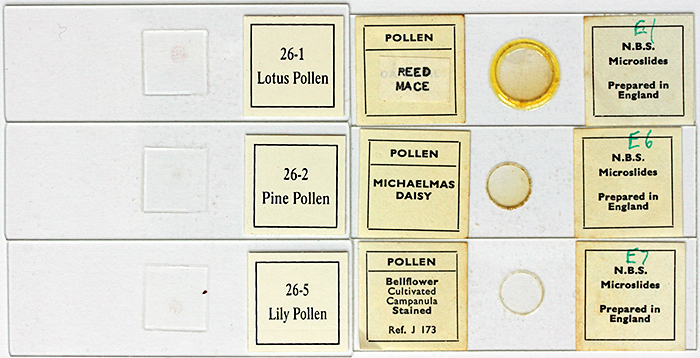 Slides of pollen
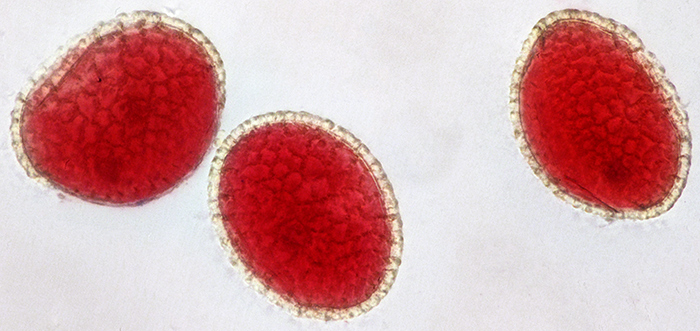 Lily pollen grains (lengths 80, 83 and 90 µm)
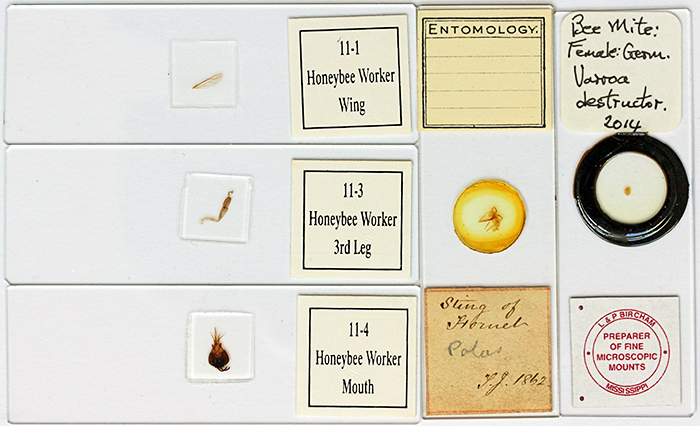 Slides of bee anatomy
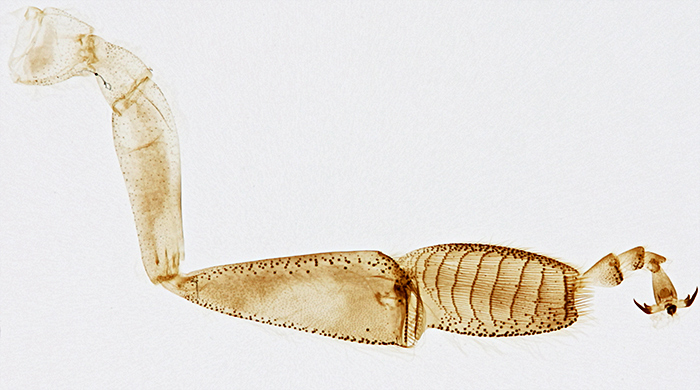 Honeybee worker third leg
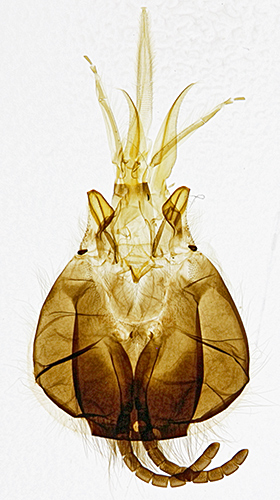 Honeybee worker mouth
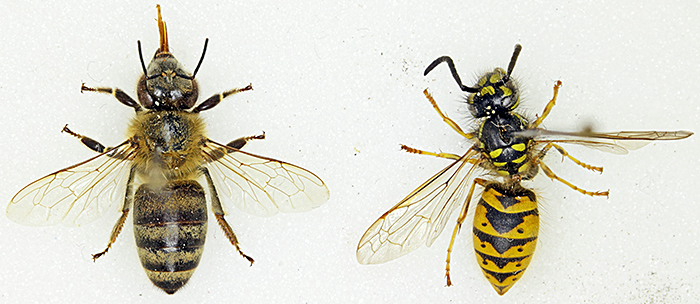 Honeybee and German wasp
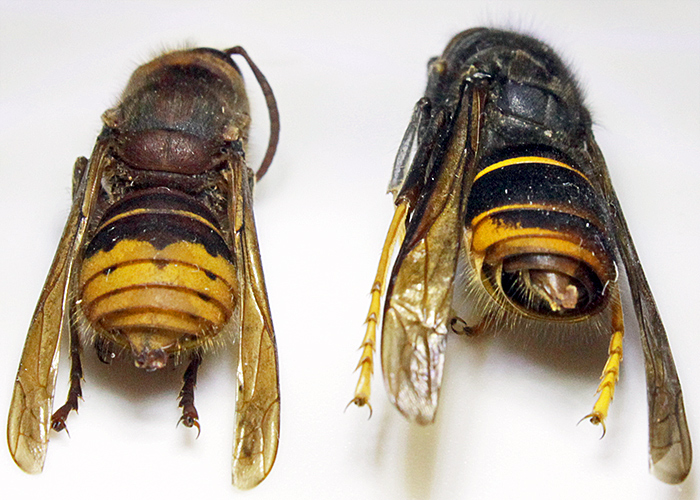 Hornet comparison (yellow-legged Asian on the right)
We had a reasonable number of visitors and we had some interesting conversations, often explaining the pros and cons of compound microscopes (high magnification, good for looking at slides, but small working distance), stereo microscopes (large working distance, good for dissecting honeybees, but low magnification) and digital microscopes. Several people asked about taking photographs through a microscope, and we explained that it can be done with a smartphone, a C-mount camera, an eyepiece camera, a point-and-shoot camera with a small zoom range, a mirrorless camera or a digital SLR.
Several visitors asked where to buy microscopes, so we referred them to the websites of Brunel Microscopes and GT Vision.
Honey Show
The Show was in the same area as the Trade Hall, but cordoned off until Thursday afternoon while the judging was taking place.
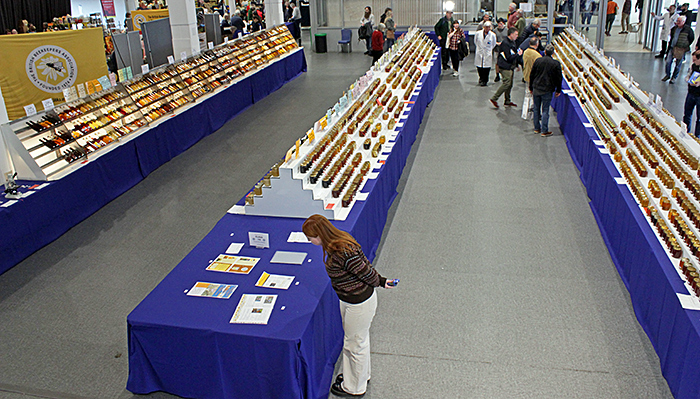 Display area for honey and mead
There were thousands of jars of honey from large and small producers, all using the same style of jar.
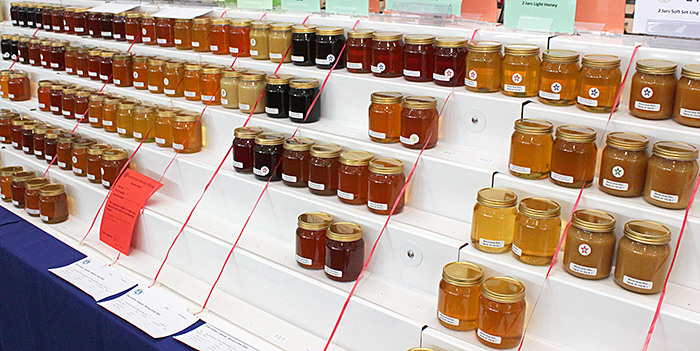 Honey competition
There were hundreds of bottles of mead (an alcoholic drink made from honey, yeast and water), displayed so that their colour could be assessed.
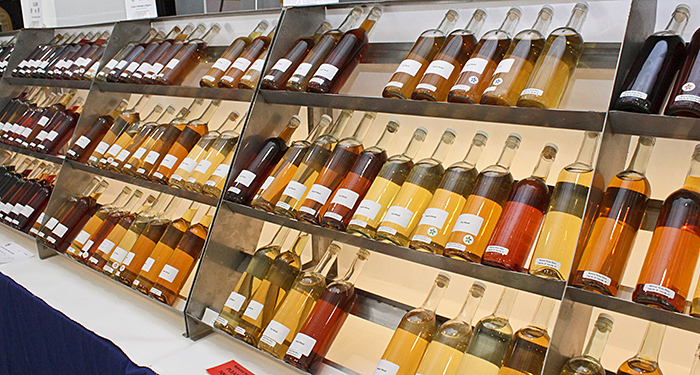 Mead competition
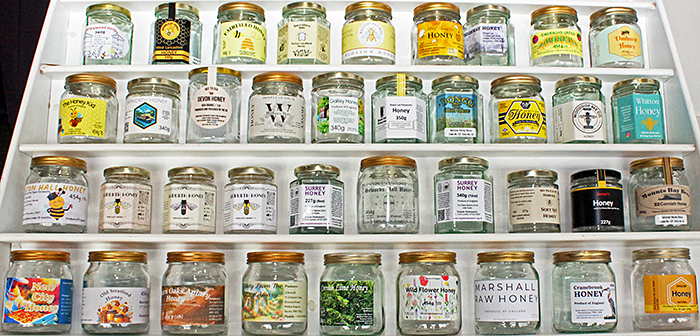 Labelled honey jars
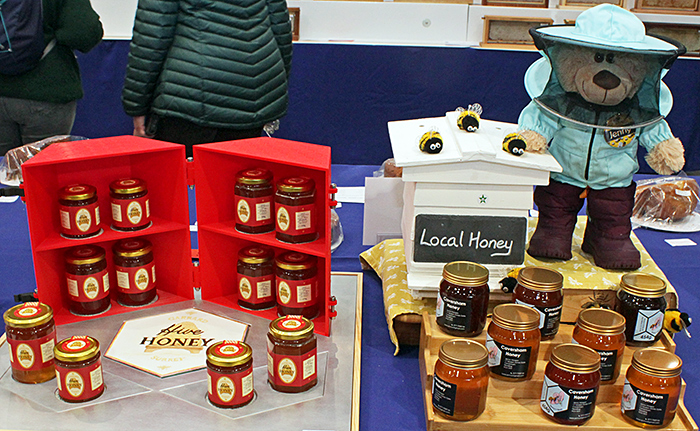 Local Honey
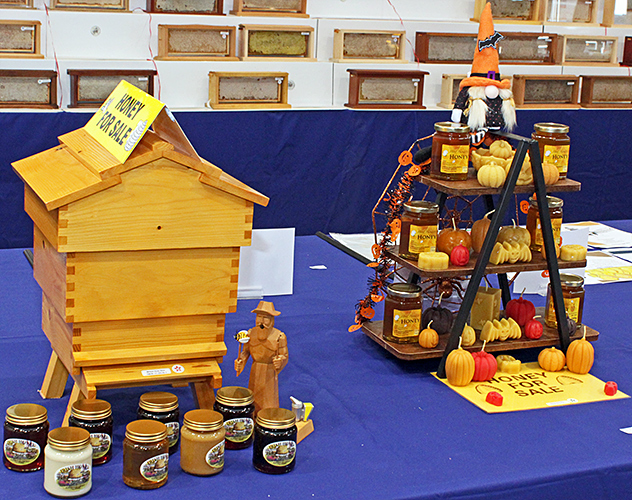 Honey for Sale
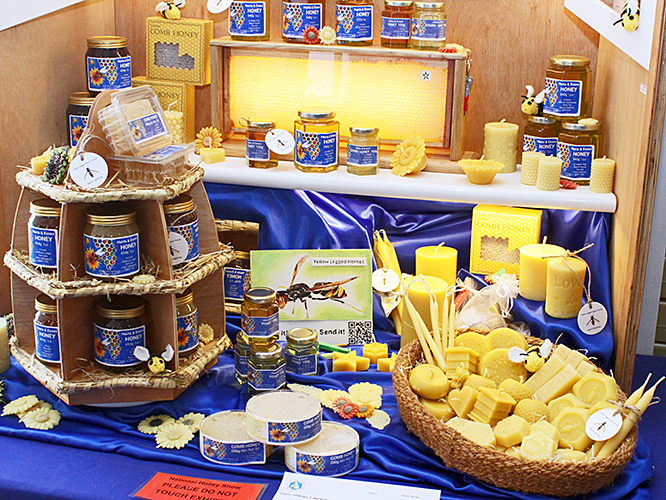 Shop Window
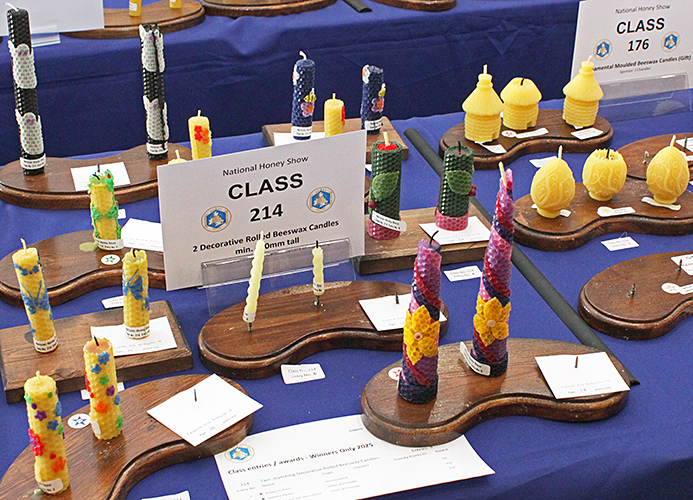 Beeswax candles
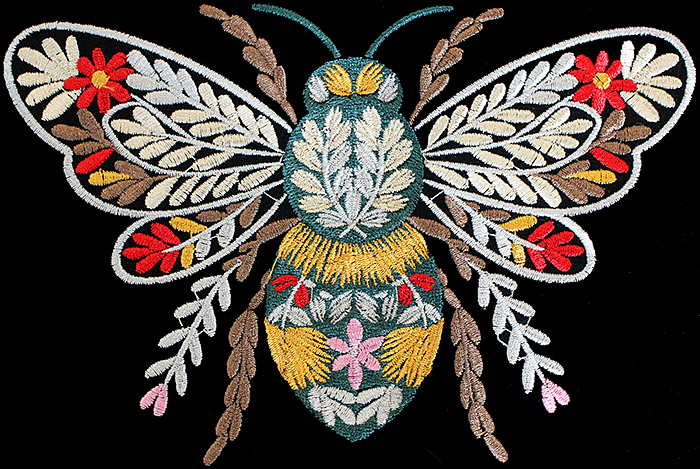 Embroidery bee [by Christine Betley]
The categories also include items of more interest to Quekett members: slides and photographs.
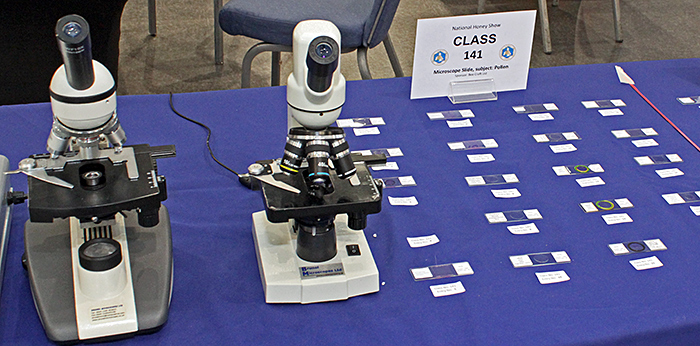 Slide competition
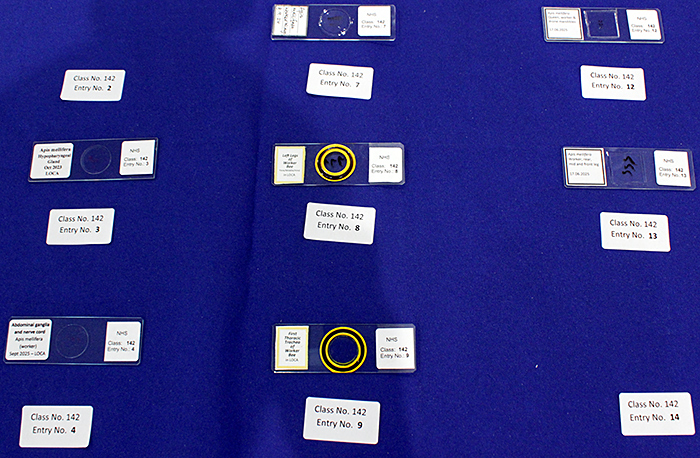 Slide competition
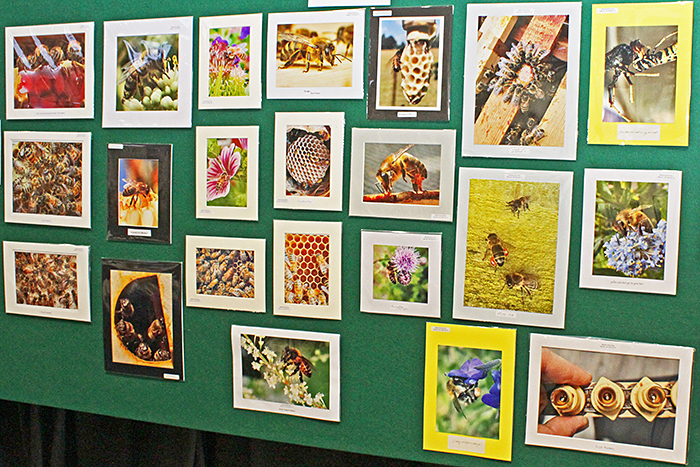 Photo competition
Trade Hall
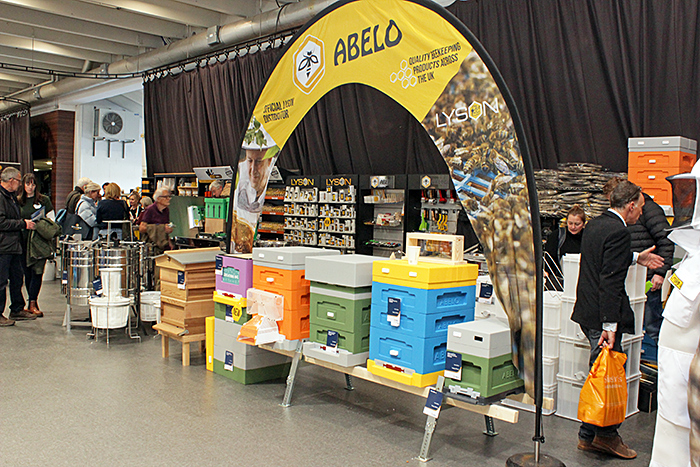
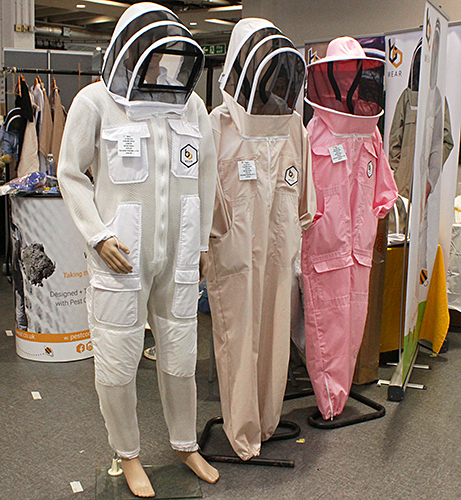
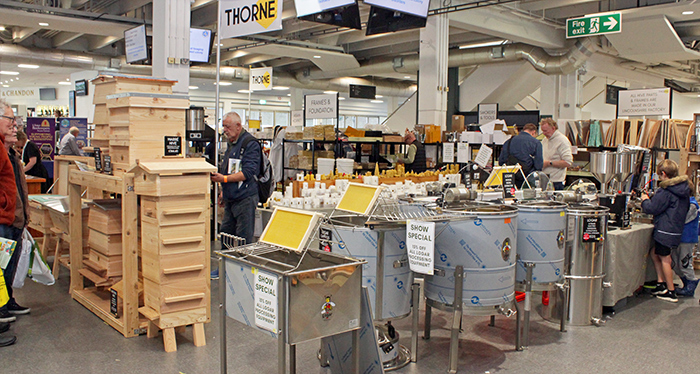
In addition to the Quekett stand, there were lots of stands in the Trade Hall where members of the public could buy almost anything a beekeeper could desire (except a microscope), browse books on bees, find out about associations to join, learn about beekeeping in developing countries and learn about pests and diseases of bees.
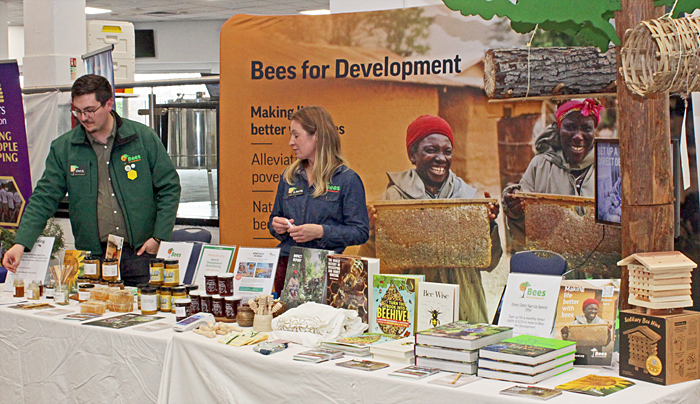
Bees for Development is a charity that makes life better with bees. They promote sustainable beekeeping to combat poverty, build resilient livelihoods and benefit biodiversity.
The British Beekeepers Association (BBKA) represent the interests of beekeeping associations at government level, and facilitates a nationwide educational structure supported by a common examination process.
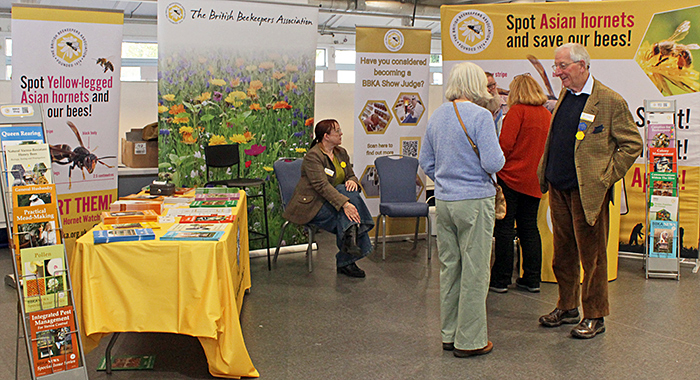 British Beekeepers Association
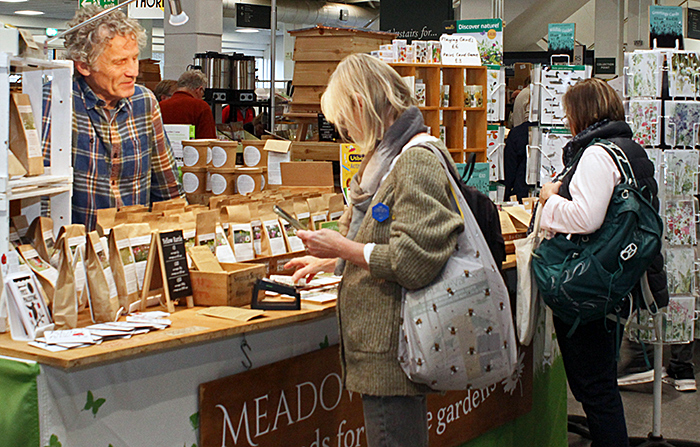
Meadow In My Garden sells a range of award-winning flower meadow seed products designed to foster a wildlife-friendly environment, and gives talks and seminars for horticultural clubs, beekeepers groups, garden shows, festivals, green events, civic societies, colleges and schools.
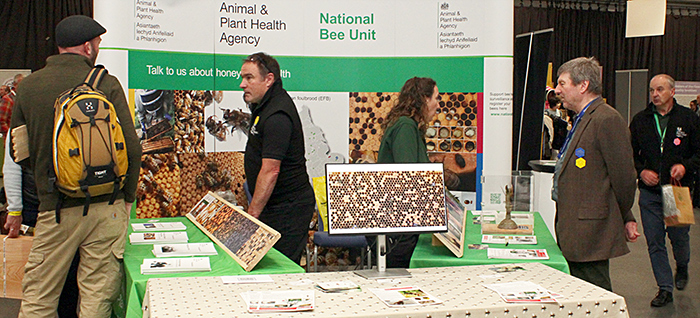
The National Bee Unit is part of the Animal & Plant Health Agency, which works to safeguard animal and plant health for the benefit of people, the environment and the economy. They are involved in the management and control of bee pests and diseases, along with training and dissemination of information to beekeepers. At the Show they were offering advice on problems including Tropilaelaps mites, which are becoming a problem, the Asian hornet (Vespa velutina), European foulbrood and Varroa mites.
Northern Bee Books were selling an amazing number of new books on honeybees, and a good selection of used books.
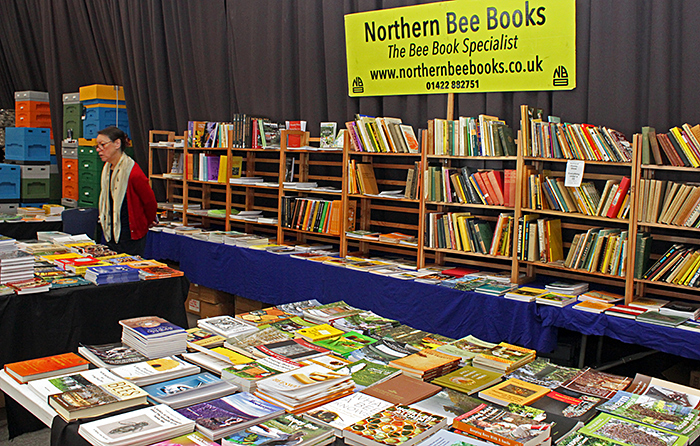
There were also stands selling beehives, protective clothing, jar fillers and probably everything else that a beekeeper could want (except a microscope).
Workshops
The Show included workshops on a wide range of topics, including three on microscopy by Sean Stephenson (Microscopy: Disease Testing and Abdominal Dissection, Microscopy for beginners: Bee Anatomy Slides, and Microscopy: Pollen Slides), one by Marin Anastasov (Honey Bee Anatomy), one by Petar Stipanovic (Capture the Buzz: Macro Photography Workshop with Your Smartphone & Recycled Gear) and two by Chris Park (Skep making).
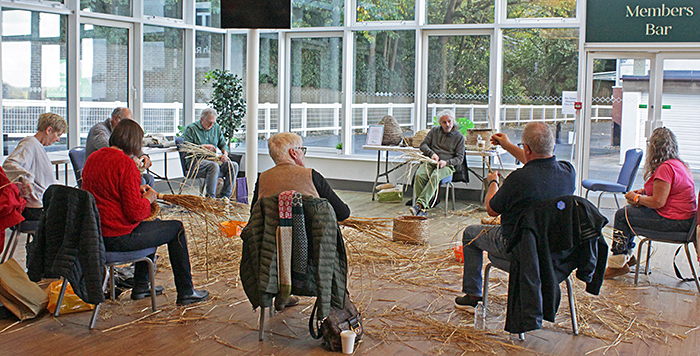 Skep-making workshop
The next National Honey Show will be held at Sandown Park Racecourse from Thursday 22nd to Saturday 24th October 2026, and we are planning to be there again.
Report and photographs by Alan Wood