

Gossip meeting “Diseases and afflictions”
Tuesday 12th May 2026
This half-day gossip meeting was held in the Angela Marmont Centre in the Natural History Museum in London. The meeting started with the participants giving brief introductions to the slides and other items that they had brought, and then we spent the afternoon examining and discussing them. The Museum kindly allowed us to use their binocular Leica EZ4 stereo microscopes and Olympus CX41 and CX43 compound microscopes.
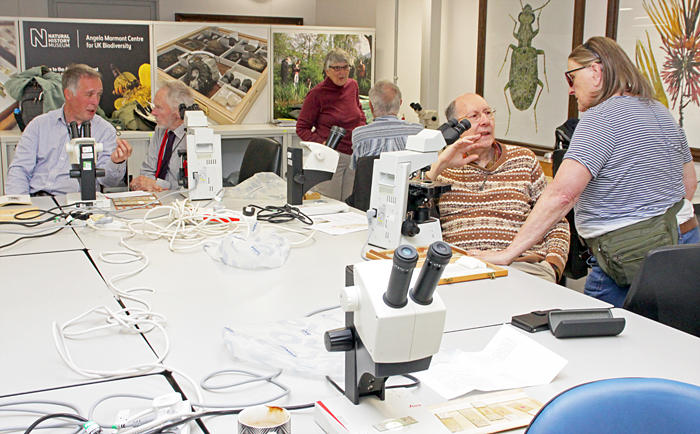 Gossip
Lisa Ashby brought two catalogues of Watson equipment that could have been used to treat all sorts of diseases and afflictions.
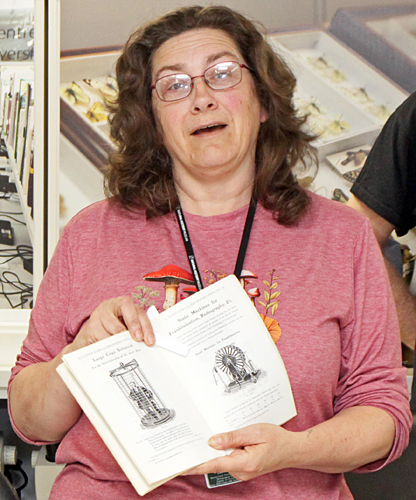 Lisa Ashby
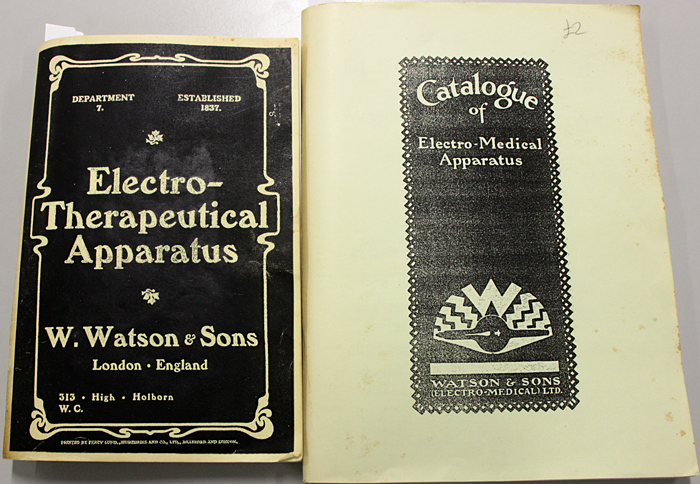 Watson catalogues
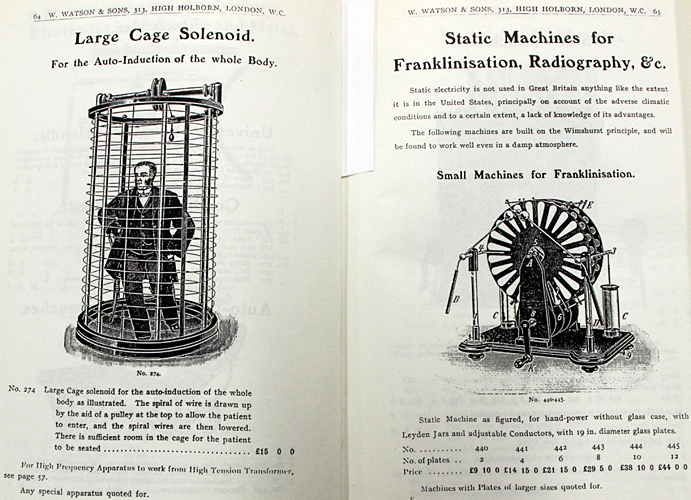 Watson medical equipment
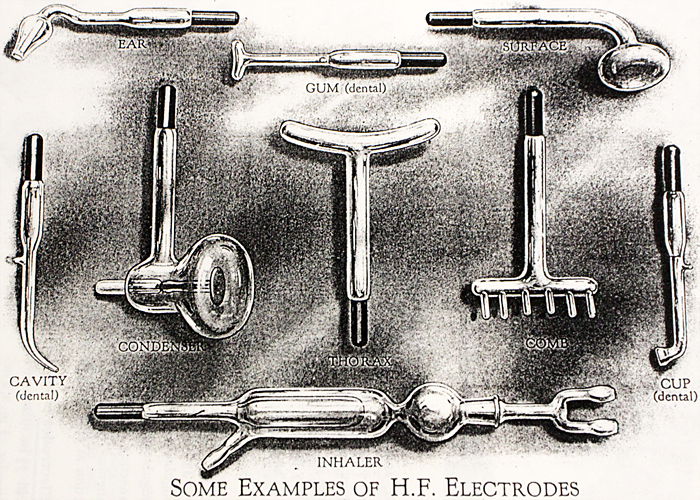 Watson vacuum electrodes
Nigel Ashby brought 12 Watson slides covering conditions including bubonic plague, cholera, malaria, psoriasis, skin cancer, typhus and tuberculosis.
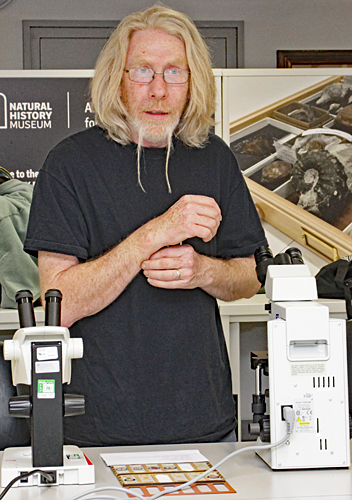 Nigel Ashby
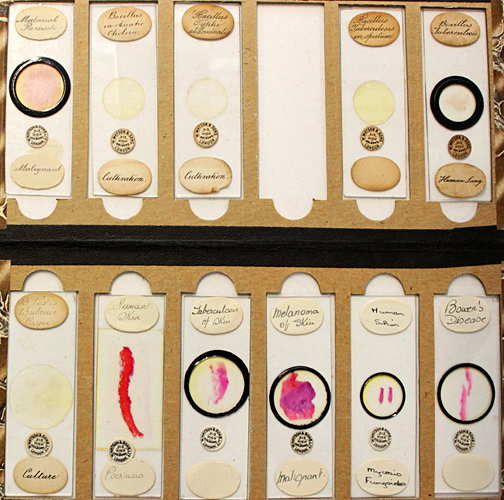 Nigel’s Watson slides
Phil Greaves brought his binocular Wild M11 (with its domed case) to show a slide of an Ascaris larva in the thalamus of an 8-year-old girl. A former president, Dr Michael Salmon, referred to this case in his Presidential Address in 1995.
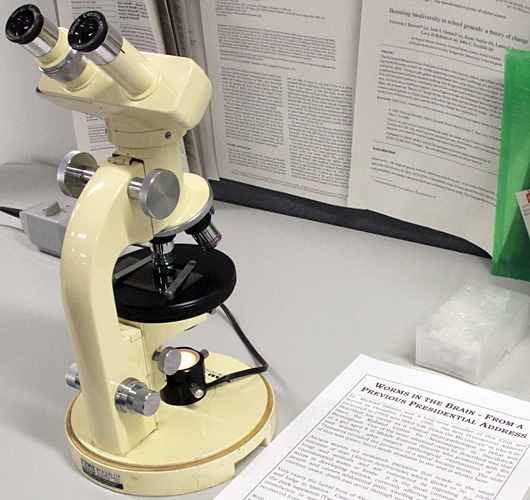 Phil’s exhibit
Pam Hamer showed a broken tooth that she had ground down to show the various layers of its internal structure, accompanied by a diagram and her usual comprehensive notes.
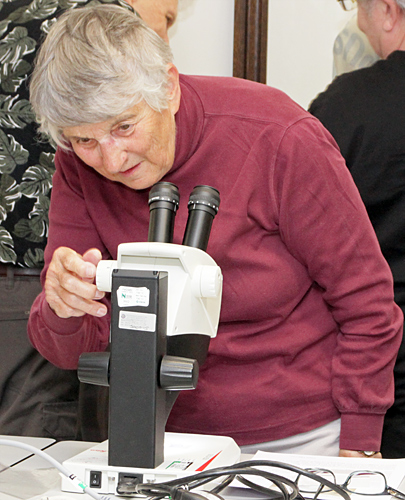 Pam Hamer
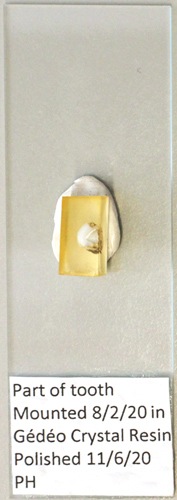 Tooth section
Terry Hope brought a tray of slides from Leeds Infirmary in the 1920s, covering conditions including anthracosis, anthrax, diphtheria, pernicious anaemia, silicosis, syphilis and tuberculosis.
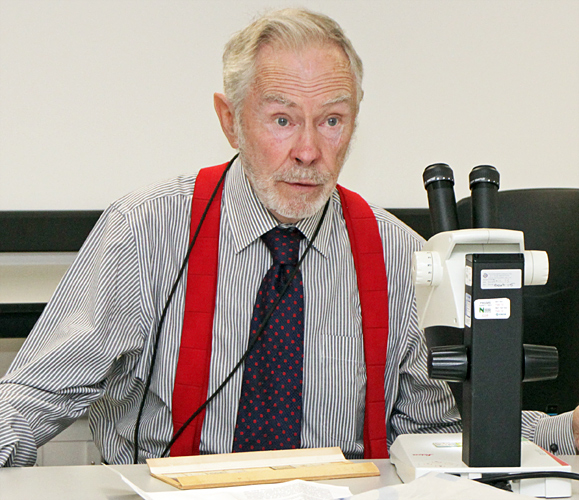 Terry Hope
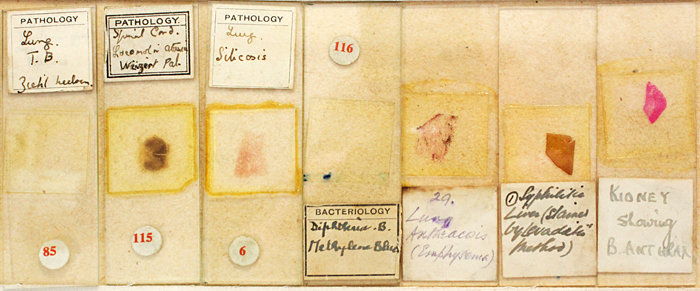 Terry’s slides
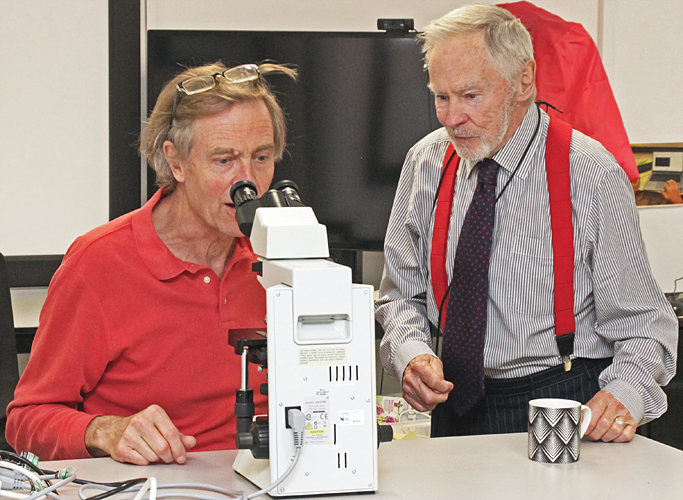 James Firth and Terry Hope
Graham Matthews showed a capsule of omeprazole that he had sectioned to reveal its internal structure.
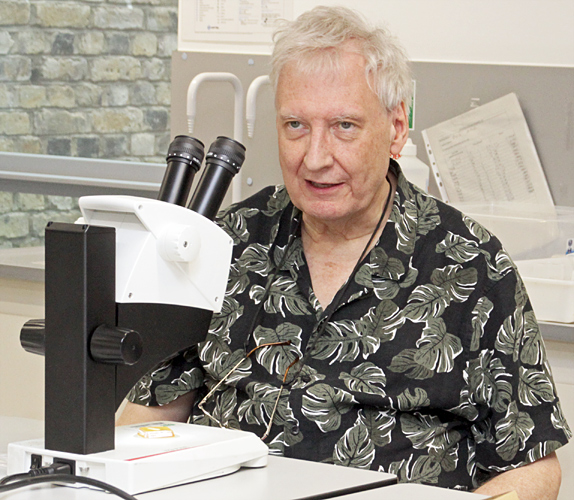 Graham Matthews
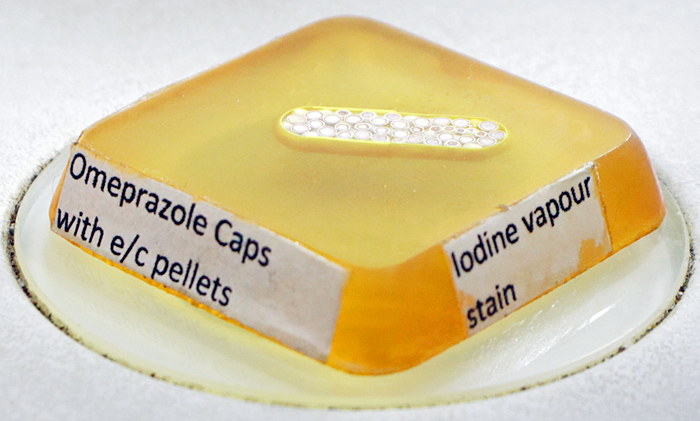 Sectioned omeprazole capsule
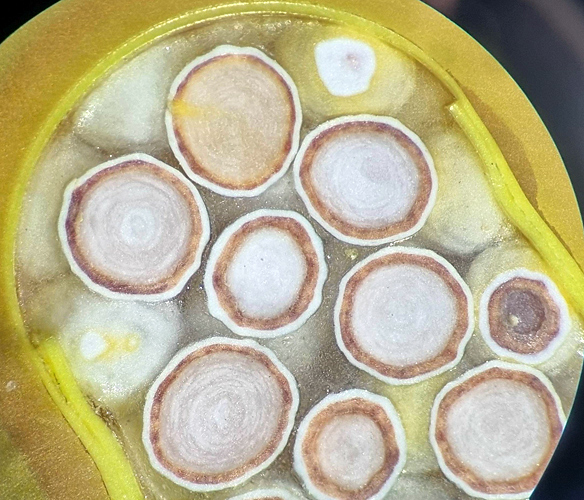 Close-up of sectioned omeprazole capsule [By Robert Ratford]
Jacky McPherson was giving away dozens of slides with wax-embedded sections of mouse intestine, some with tumours. She showed one of the slides that had been de-waxed and stained. The intestines had been curled before sectioning to produce “swiss rolls”, providing a lot of material on each slide.
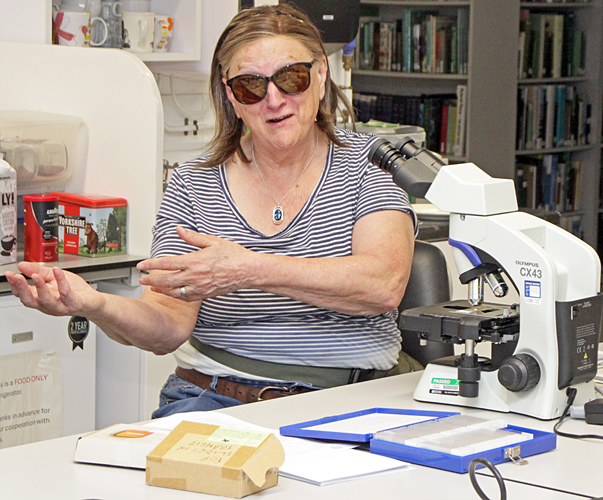 Jacky McPherson
Robert Ratford brought a wooden box with twelve trays of slides of all sorts of specimens relating to diseases and afflictions.
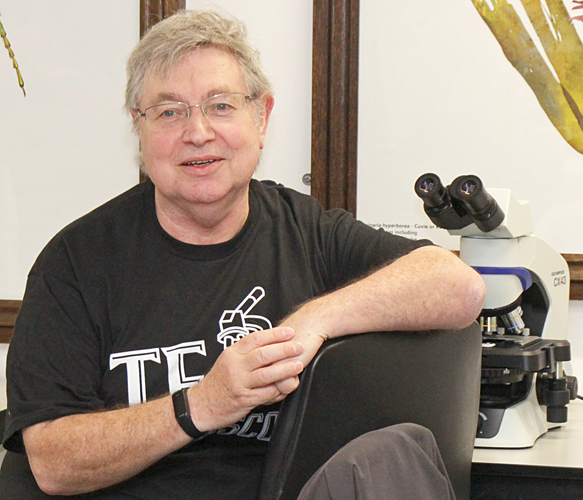 Robert Ratford
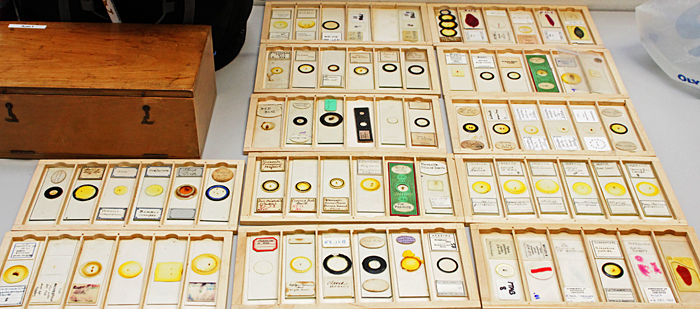 Robert’s slides
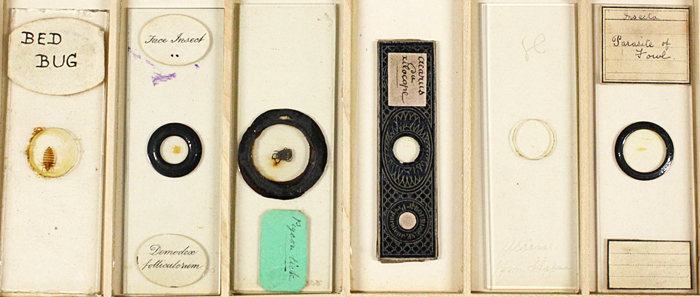 Robert’s slides
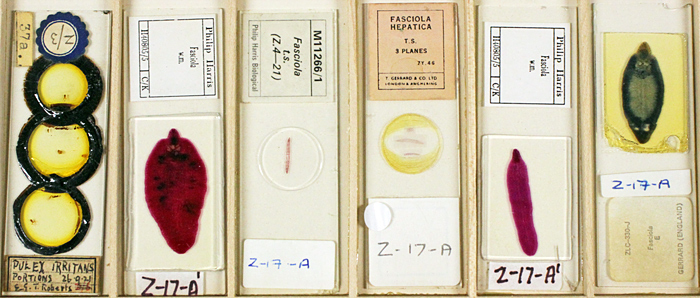 Robert’s slides
Chris Thomas brought a boxed set of human histology slides that were sold by Raymond A. Lamb. The set included 27 slides of normal tissues plus 61 slides of tissues with a variety of conditions. The slides were numbered, and a key was provided.
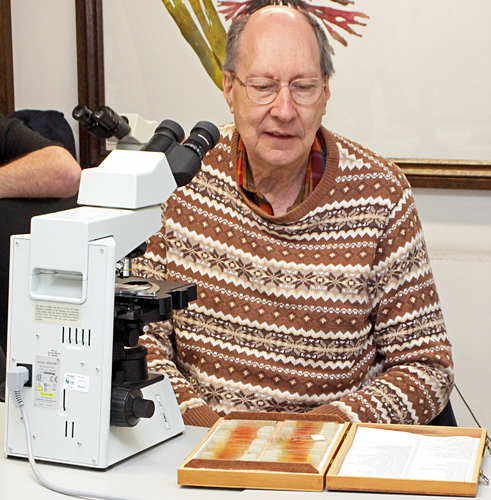 Chris Thomas
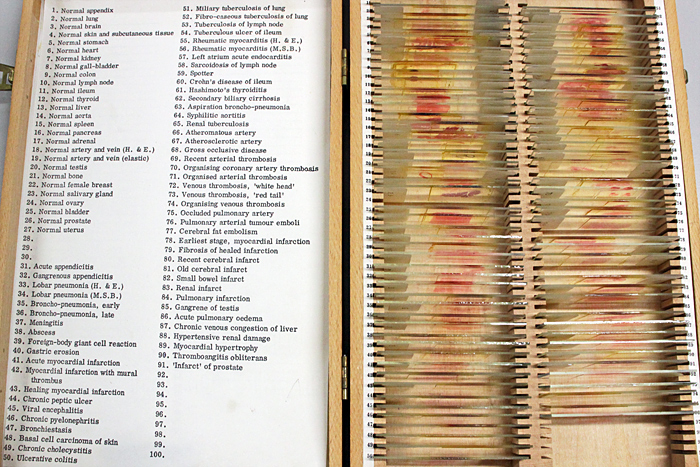 Chris’s exhibit
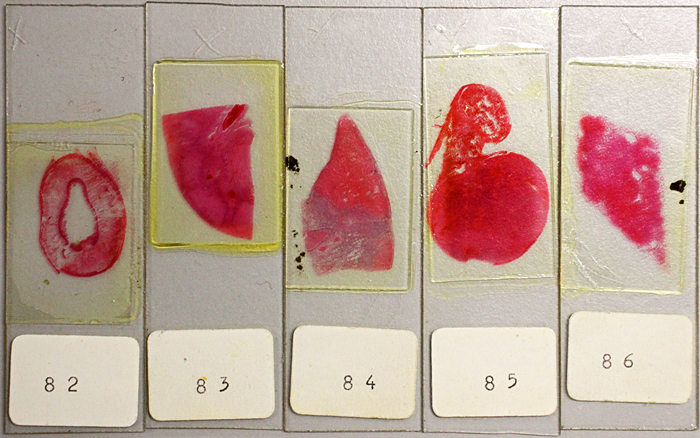 Chris’s slides
Alan Wood had noticed that the Club’s latest leaflet (Things to look at with microscopes: Exploring polarised light) mentioned using stereo microscopes. He had recently worked out how to use polarised light with his Olympus SZ4045. He used an LED stage plate to provide transmitted light, with a camera polarising filter resting on it. For the analyser, he attached another camera polarising filter to the 48 mm thread that is normally used to attach supplementary objectives. It worked well and provided a much larger field of view than a compound microscope, so that all of a thin rock section could be seen
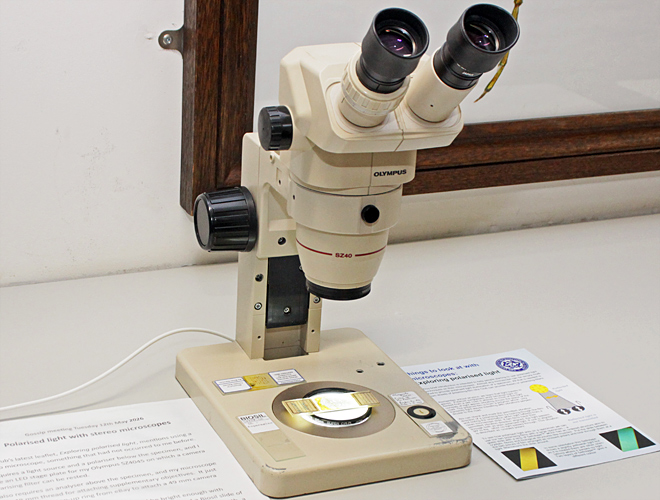 Alan’s exhibit
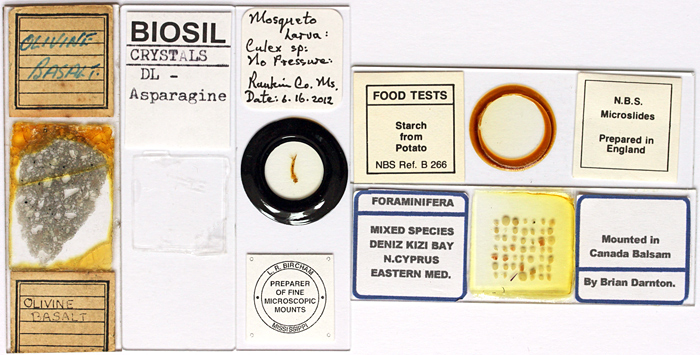 Slides for viewing under crossed polars
Alan also brought some slides relevant to the topic of the meeting, Pulex irritans (human flea), Ascaris (nematode), malaria parasite (Plasmodium), bed bug (Cimex lectularius) and tapeworm proglottid (cestode).
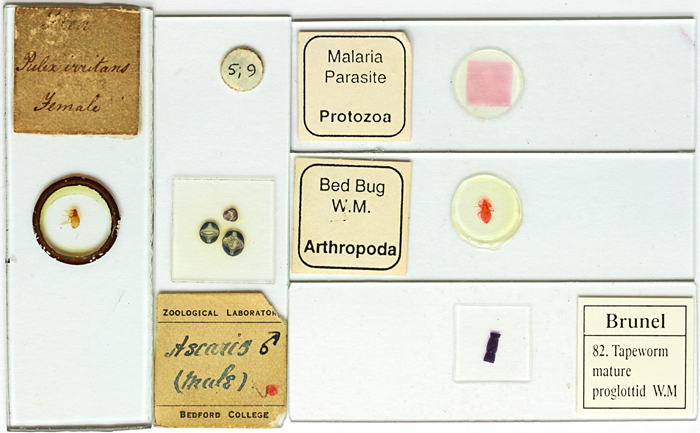 Alan’s slides
The eyepieces of the Museum’s microscopes are fixed in place to prevent them being stolen, which unfortunately also prevents taking photographs with T-mount adapters or afocal arrangements. However, it does not stop Quekett members holding their smart phones over the eyepieces.
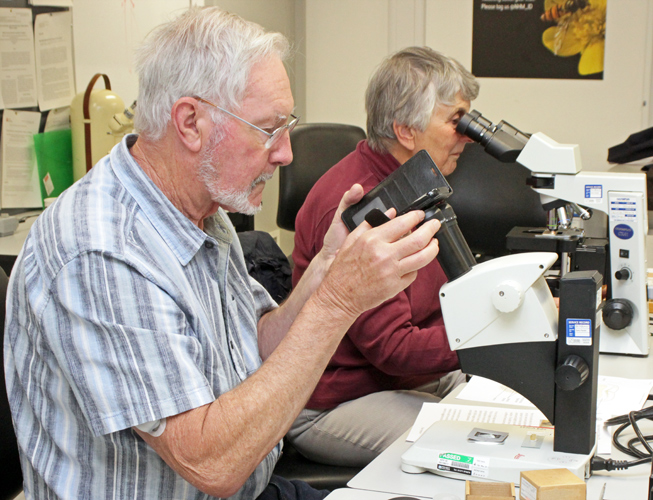 Nigel Williams and Pam Hamer
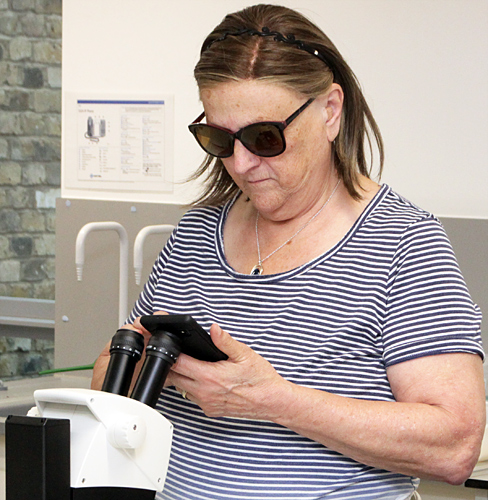 Jacky McPherson
After the gossip, we walked along the corridor to the Neil Chalmers Seminar Room for Terry Hope’s third presidential address “Tuberculosis under the microscope”.
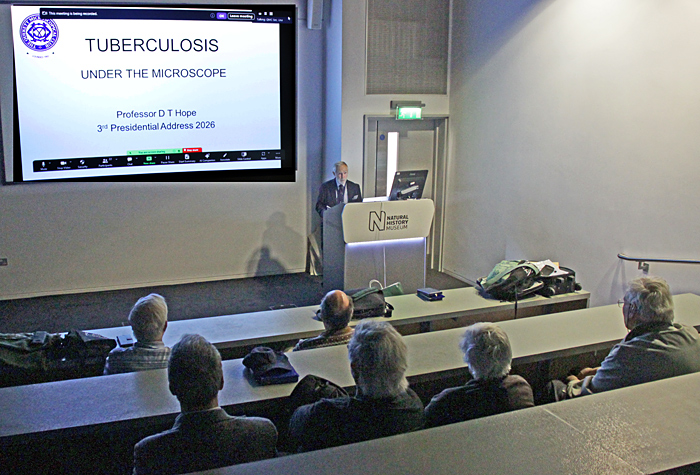 Terry Hope lecturing
Quekett members can watch a video of the lecture.
Report and most photographs by Alan Wood