

Wimbledon Common Open Day
Sunday 13th September 2026
On a September day with a mixture of sunshine and showers, James Firth, Laurence Peacock and Alan Wood took their microscopes, cameras and computers to Wimbledon Common for their annual Open Day as a contribution to the Quekett’s microscopy outreach programme. The Open Day originated as Stables Day, an opportunity to meet the Rangers and their horses, but it has expanded into a country and crafts fair that attracts hundreds of visitors. As usual, we were based in the Information Centre.
We collected samples from the pond in the Wildlife Garden so that we could show what we found to visitors to the Open Day. We used pipettes to transfer specimens from jars into small Petri dishes or onto slides. We also collected flowers, leaves, galls and bark from the Common to show under our microscopes.
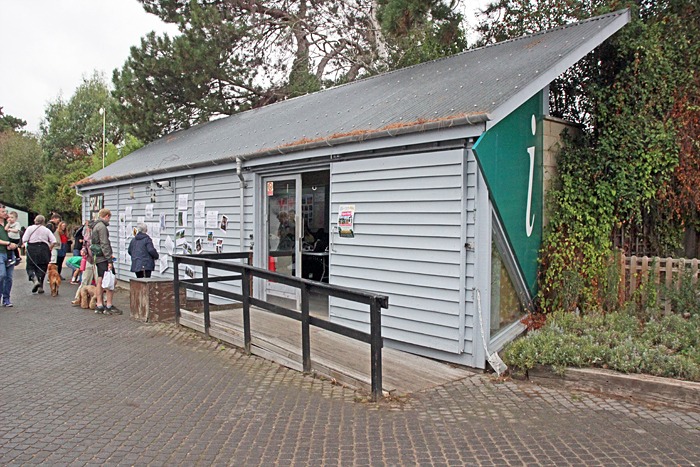 Information Centre
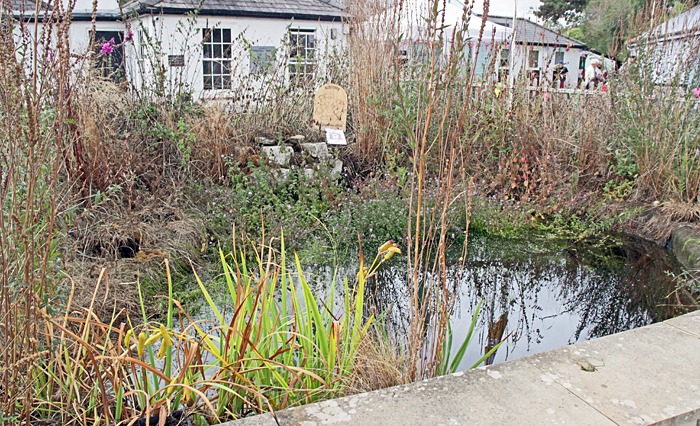 Pond in the Wildlife Garden
James Firth brought his trinocular Olympus CK40 inverted microscope with 10×, 20× and 40× phase-contrast objectives. Inverted microscopes are designed for looking up through the bottom of a slide or a Petri dish.
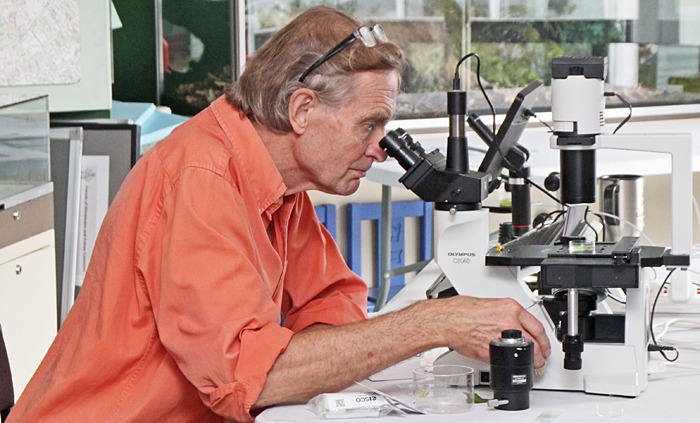 James Firth
Laurence Peacock brought his Bresser Biolux compound microscope with an eyepiece camera linked to a Windows laptop, and he showed lots of videos and stills of pond life on the laptop. He also brought an Apple laptop and an Adonstar digital microscope with a built-in 10.1″ screen.
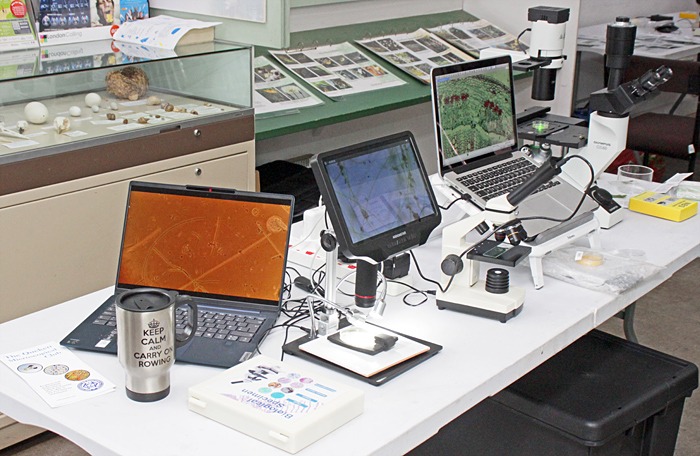 Compound microscopes and laptops
Alan Wood brought his Olympus SZ4045 stereo microscope with zoom range of 6.7× to 40× and a 144-LED ring-light, and some prepared microscope slides. He also brought two small microscopes that are suitable for children, a stereo microscope with a fixed 20× magnification, and the Natural History Museum Pocket Microscope with a zoom range of 20× to 40×.
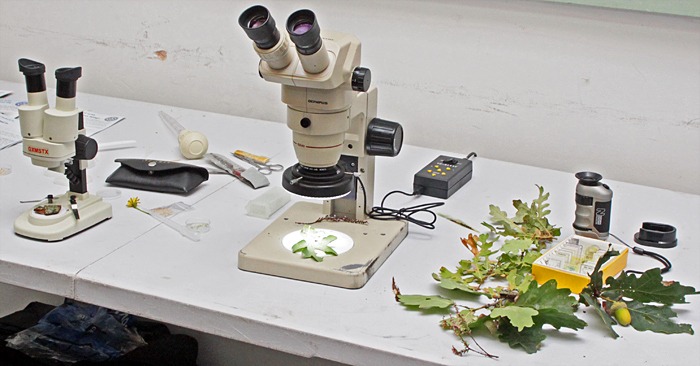 Stereo microscopes
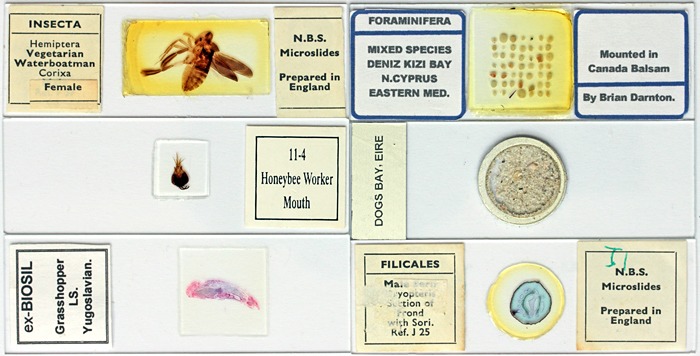 Microscope slides
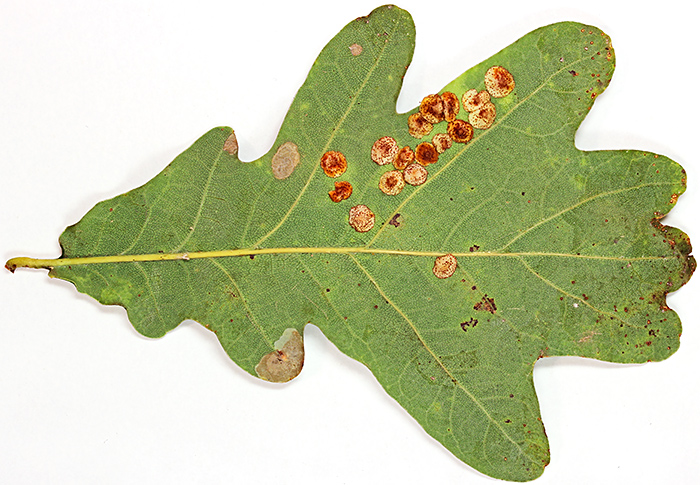 Oak leaf with galls and mines
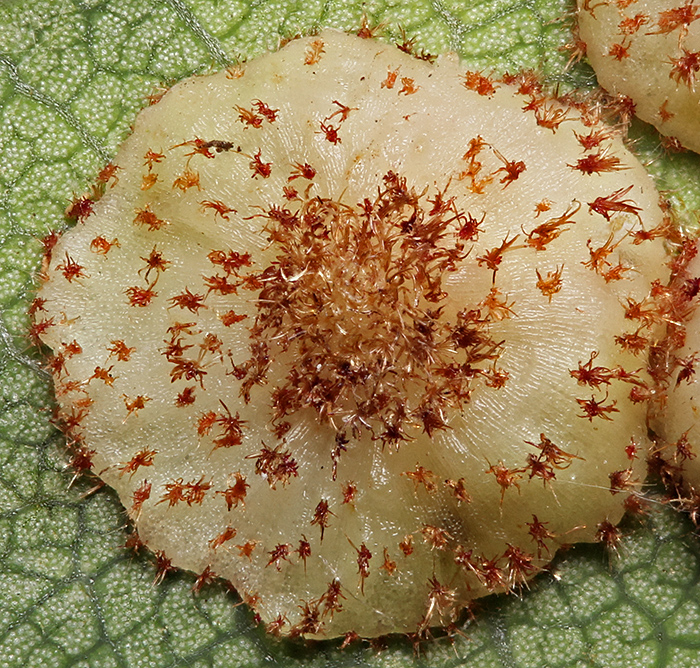 Common spangle gall on oak leaf (caused by the gall wasp Neuroterus quercusbaccarum)
 Lichens on oak bark
The water level in the pond was very low because of the drought, so we were not sure what we would find. Our animal specimens included mosquito larvae, a mite, ostracods, rotifers and ciliates. All of the specimens were returned to the pond. We did not find any live water-fleas (just one dead chydorid), and we did not find any nymphs of mayflies, damselflies or dragonflies. Algal specimens included desmids and Spirogyra.
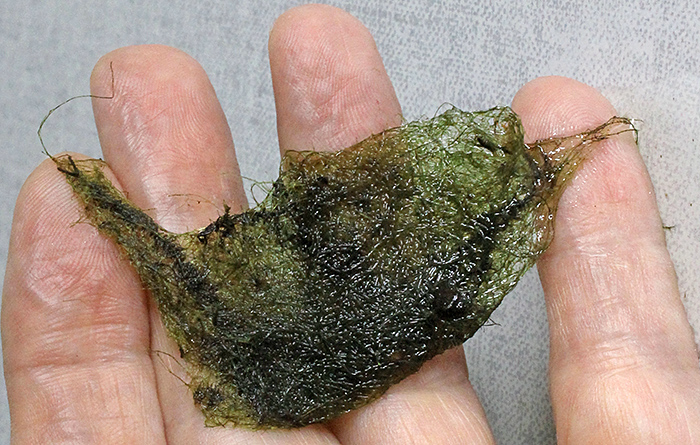 Blanket weed from pond
Blanket weed consists of thousands of strands of filamentous algae. One of the best-known genera is Spirogyra, which has spiral chloroplasts.
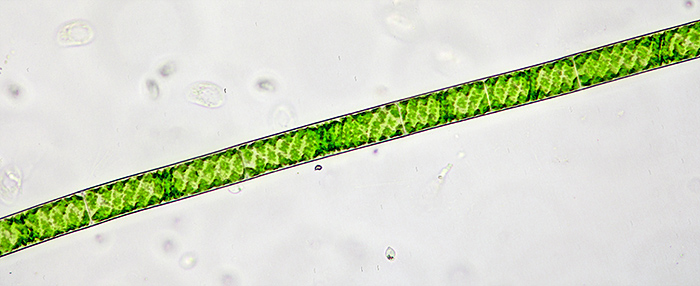 Single filament of Spirogyra
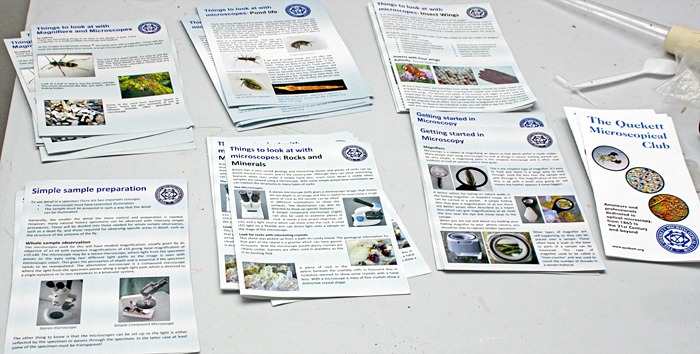
We had a reasonable number of visitors, adults as well as families, and some interesting conversations. One visitor asked what had happened to the observation beehive that Norman Chapman used to take care of; it had been abandoned by the bees and removed several years ago. Two visitors remembered working with Dennis Fullwood in the Natural History Museum, where he repaired broken slides for them, and seeing him at events on the Common.
Wimbledon and Putney Commons Open Day
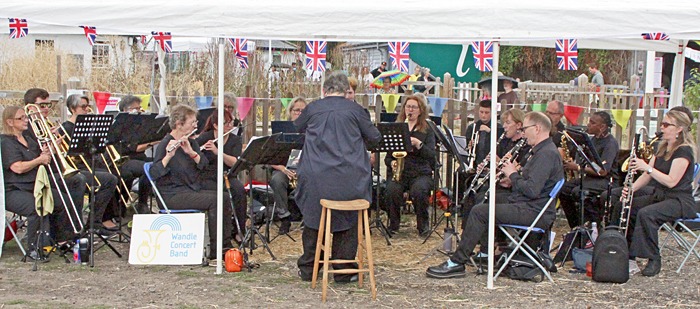
On the grass outside there were dozens of marquees set up by local organisations, organisations concerned with nature, stalls selling all sorts of things including toys and pet supplies, and plenty of things to eat and drink. There were arena events, donkey rides, a funfair and a band, and the stables were open so that visitors could meet the Rangers’ horses.
The Friends of Wimbledon and Putney Commons and the Wimbledon and Putney Commons Conservators shared a marquee.
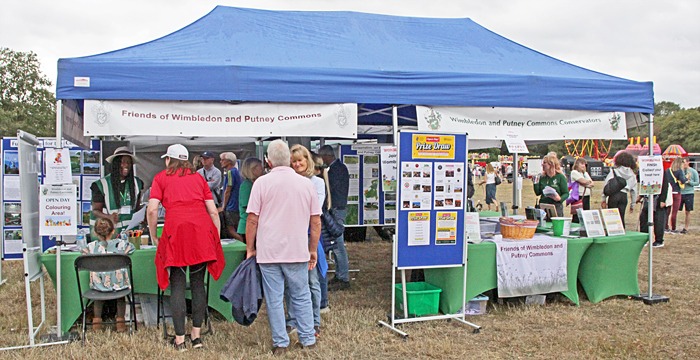 Wimbledon Common Friends and Conservators
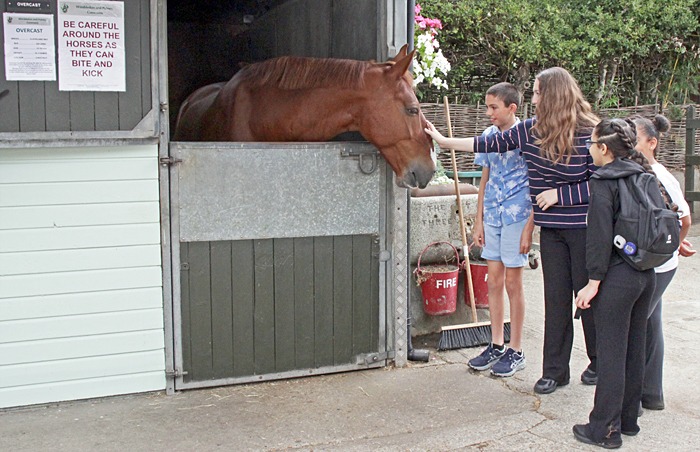 Horses in the stables
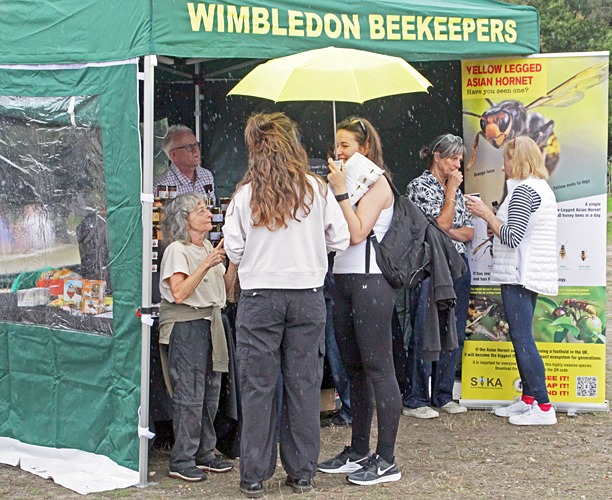
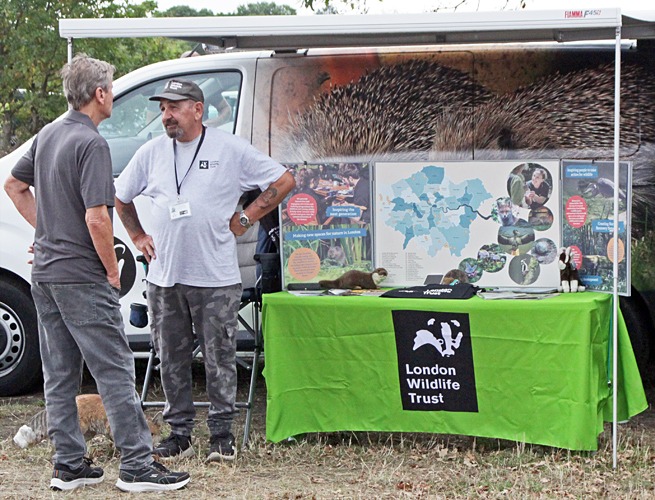
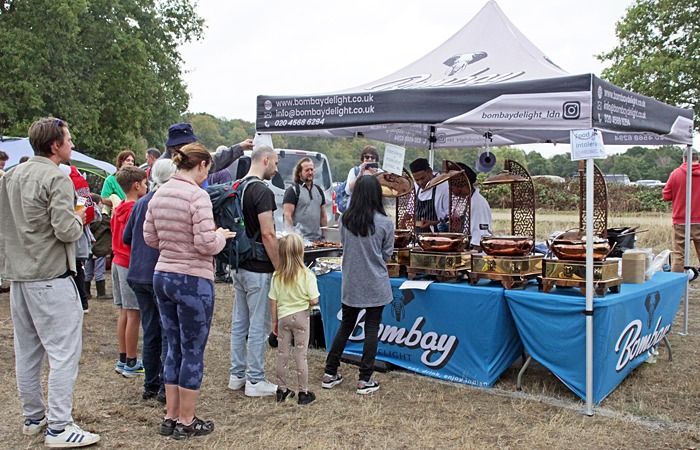
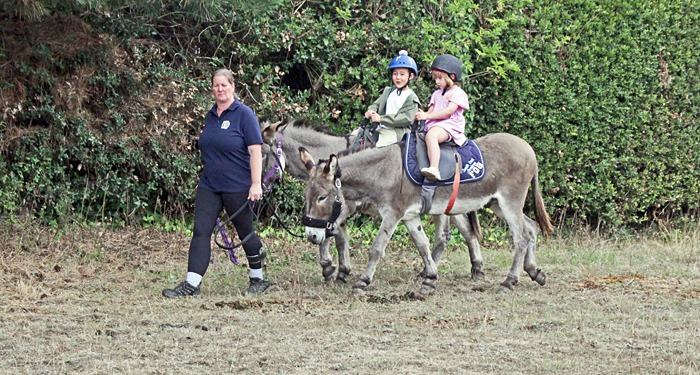 Donkey rides
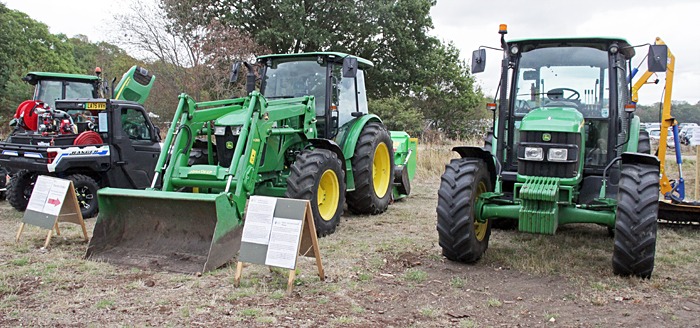 John Deere agricultural machinery
Acknowledgements
We are grateful to the Rangers for allowing us to collect small samples from the Common (which is a designated Site of Special Scientific Interest, a Special Area of Conservation and a Site of Importance for Nature Conservation), and for allowing us to set up our equipment in the Information Centre.
Report and photographs by Alan Wood