

National Honey Show
Thursday 22nd to Saturday 24th October 2026
This was our thirteenth visit to the National Honey Show, which is a regular part of our microscopy outreach programme. It was held again at Sandown Park Racecourse in Esher in Surrey.
Quekett members Joan Bingley, Pam Hamer, Jonathan Palmer, Mark Papp and Alan Wood manned the Club’s stand in the Trade Hall, which is adjacent to the area where all of the entries for the Honey Show are displayed. We had two tables again this year, so we could show a good selection of specimens, microscopes and leaflets (the leaflets are available as free PDFs on our Downloads page). We also had a laptop computer with rolling PowerPoint presentations.
Alan Wood and Pam Hamer arrived early on the first day to get everything set up before the Trade Hall opened to the public.
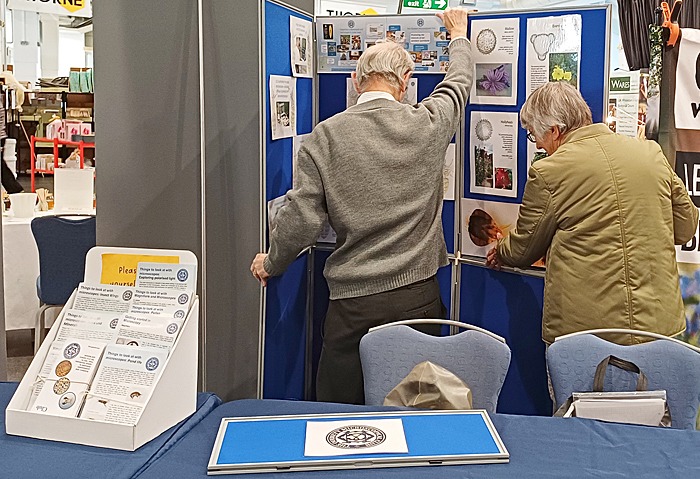 Setting up
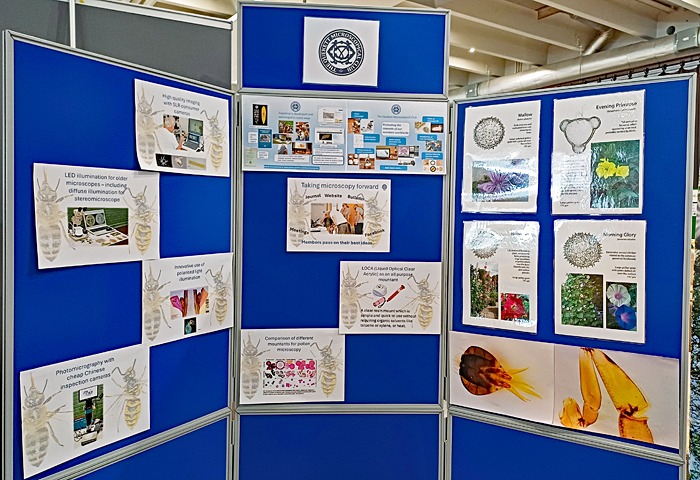 Display panels
There were lots of people in the Trade Hall, stocking up from the large range of trade stands, looking for advice on dealing with pests and diseases, and visiting the charity stands. We had a steady flow of visitors to our display stand, particularly between the lectures and workshops that are a feature of the Honey Show. On the Saturday it was significantly busier, with visitors including families with children. We had lots of queries about microscopes, many relating to the type of microscopes that would be useful for beekeeping tasks. People wanted to know where they could buy microscopes, and a few admitted that they had a microscope but were not sure how to use it. Some were interested in taking photos with microscopes. We were asked about the use of LOCA, and Chris Thomas’s article My Pollen Preparation Materials and Methods from the Bulletin comparing different mounting methods for pollen grains was of interest. Queries from people wanting to identify the pollen in honey samples were fielded well by Jonathan, an active beekeeper.
Pam Hamer brought her Vickers Patholette binocular compound microscope from the 1960s, updated with an LED illuminator, for viewing slides of pollen (used microscopes like this can be found at reasonable prices). She also brought a small Brunel MX1 stereomicroscope (10× and 30× magnifications when used with 10× eyepieces). The MX1 does not have built-in illumination, so Pam used a flexible Ikea Jansjö USB LED lamp connected to a powerbank. She also brought a digital microscope with built-in screen, a Natural History Museum Pocket Microscope, and some magnifiers.
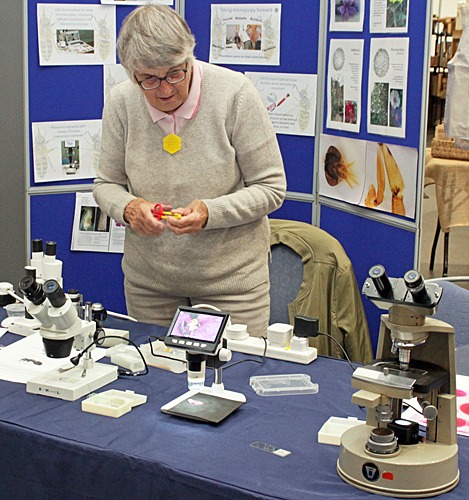 Stereo, digital and compound microscopes
We used the compound microscope to show slides of pollen. With 10× and 20× objectives and 10× eyepieces, it provides 100× and 200× magnification, enough to see details in pollen grains.
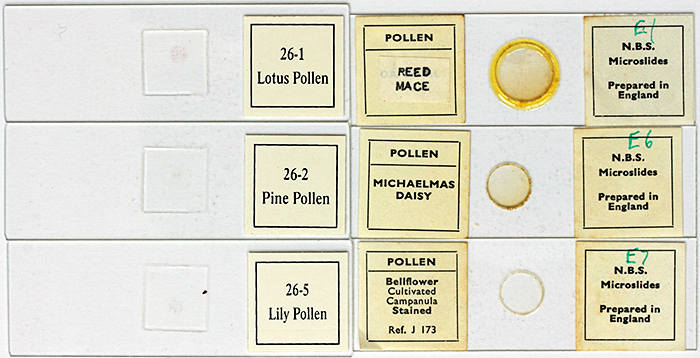 Slides of pollen
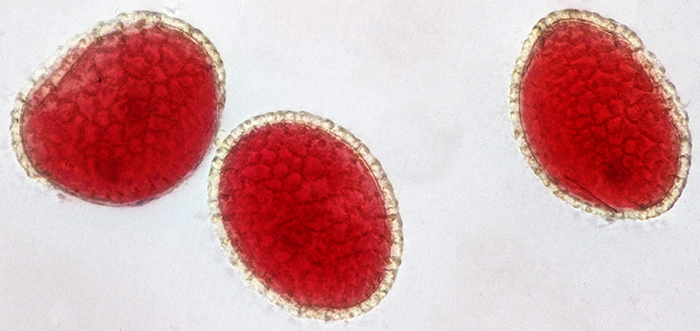 Lily pollen grains with 40× objective (lengths 80, 83 and 90 µm)
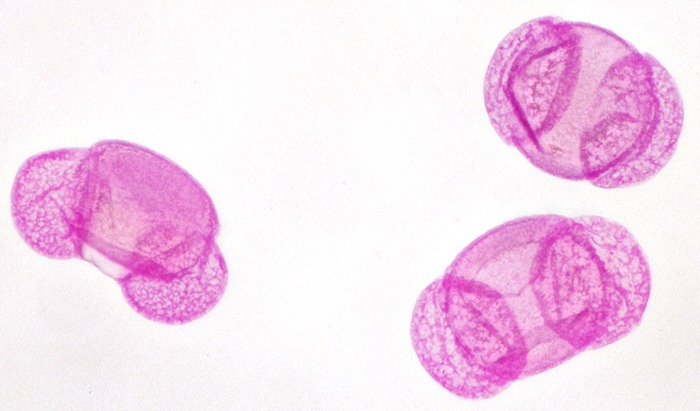 Scots pine pollen grains with 40× objective (lengths 70, 70 and 63 µm)
We used the Brunel stereo microscope and the digital microscope to show slides of honeybee anatomy.
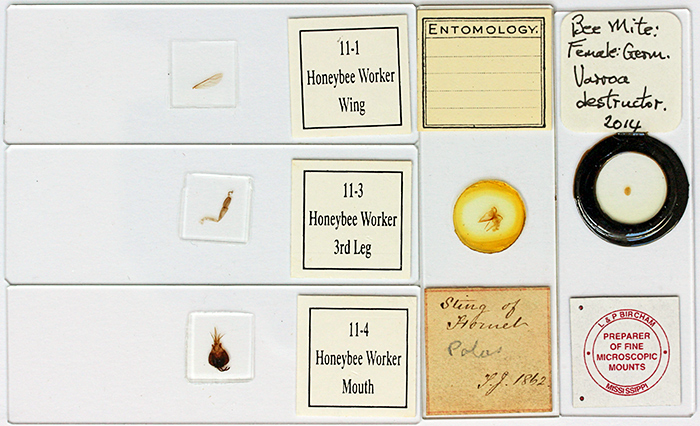 Slides of bee anatomy
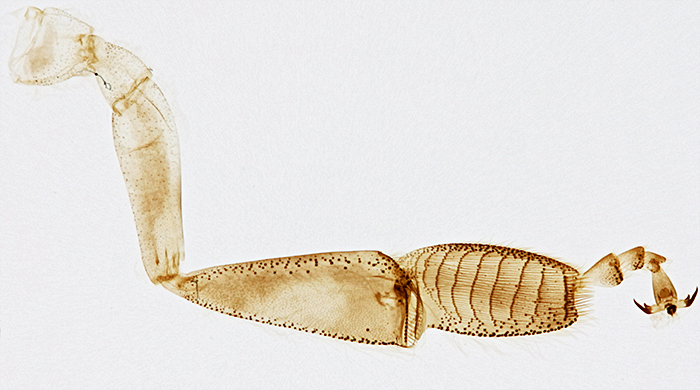 Honeybee worker third leg
We also used them to look at the anthers of flowers to illustrate how small pollen grains are (you need a compound microscope to see details).
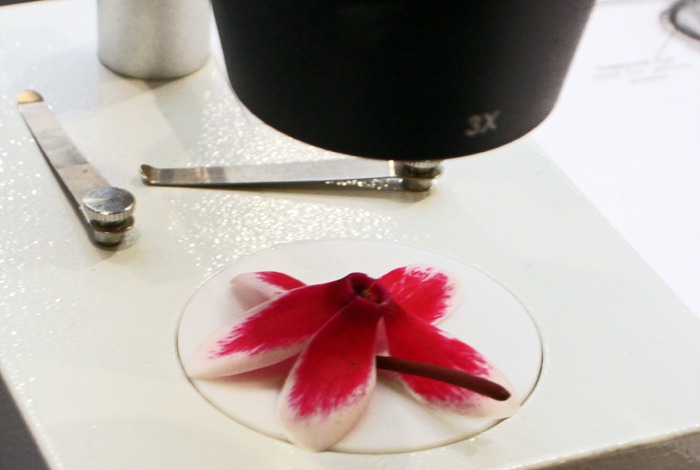 Cyclamen flower under stereo microscope
The Show had a quiz for children that included a two-part question that required them to visit our stand. “What is the structure a bee uses to suck up nectar called, and how long is it?”
 Quiz question
Pam provided a diagram of a honeybee’s head with the proboscis labelled. We used the stereo microscopes to show slides of honey bee heads resting on a piece of graph paper with 1 mm squares:
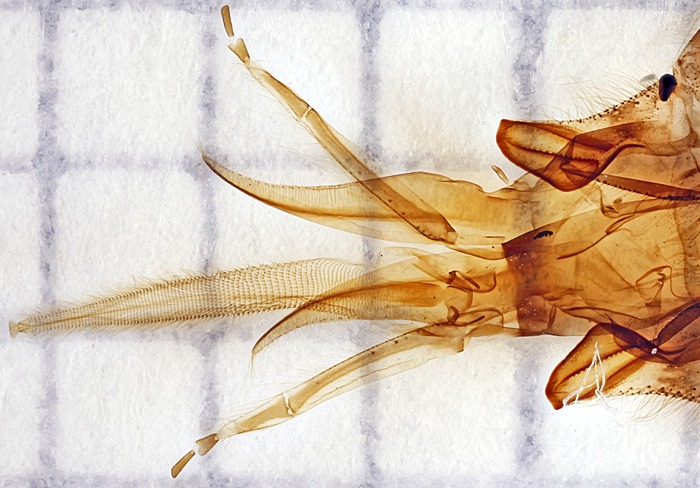 Honeybee mouthparts with 1 mm scale
Alan Wood brought his Olympus SZ4045 zoom stereo microscope from the 1990s, which provides a continuous range of magnification from 6.7× to 40× when used with 10× eyepieces. For illumination, he has replaced the original tungsten reflected light with an LED ring-light with variable intensity. He also brought set specimens of a honeybee and a wasp (Vespula germanica), and prepared slides of honeybee parts and pollen. With a large base and working distance of around 90 mm, this sort of microscope is ideal for dissecting honeybees.
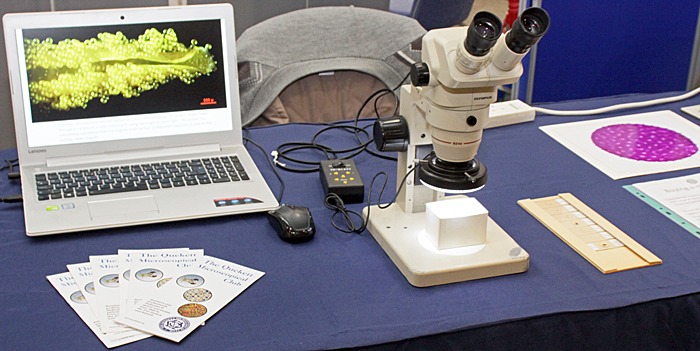 Stereo microscope and slide show
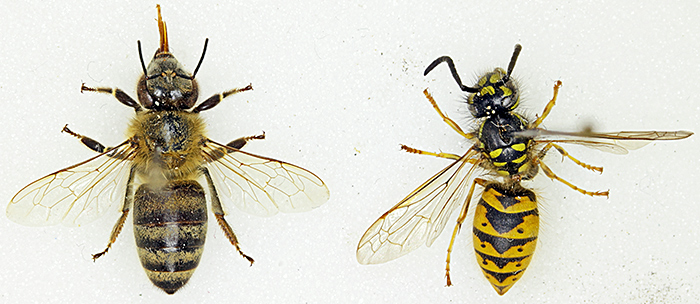 Honeybee and German wasp
Alan also brought his laptop computer to show a rolling PowerPoint presentation of slides and photomicrographs taken by Quekett and PMS members.
Slide show: Honeybee anatomy, parasites and pollen
Click the arrows to move through the slides. Click the symbol at bottom right for a larger version.
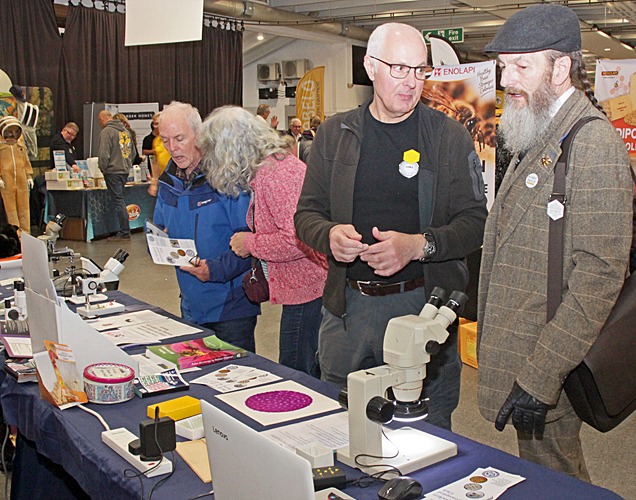 Mark Papp (spectacles) with visitors
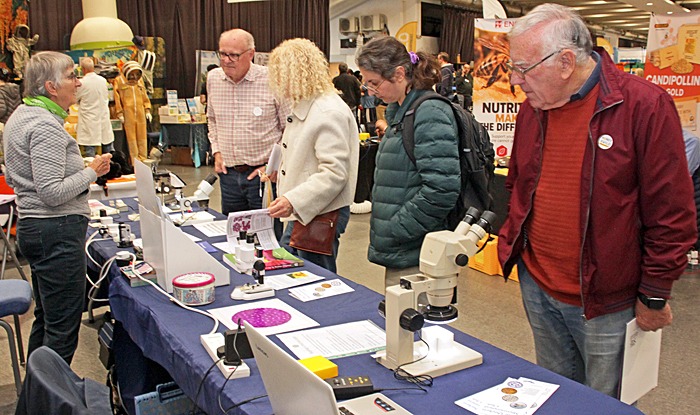 Pam Hamer and Jonathan Palmer with visitors
Honey Show
The Show was in the same area as the Trade Hall, but cordoned off while the judging was taking place. The public were allowed in on Thursday afternoon.
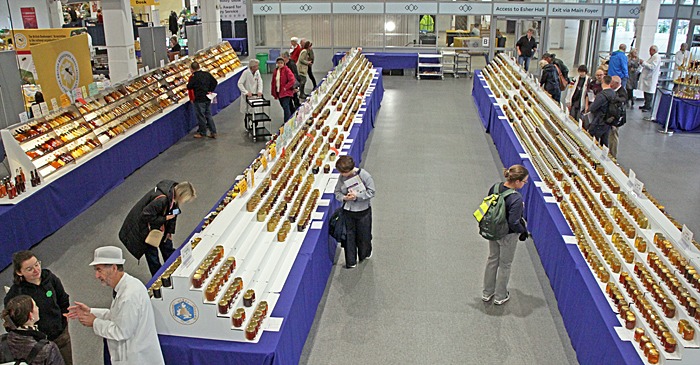 Display area for mead and honey
There were hundreds of bottles of mead (an alcoholic drink made from honey, yeast and water), displayed with back lighting so that their colour could be assessed.
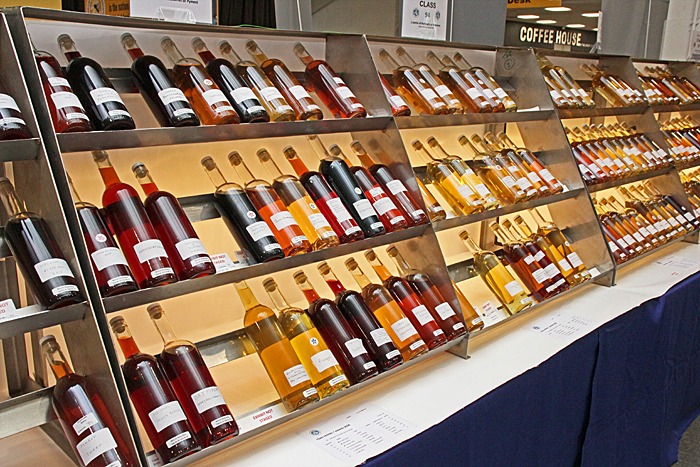 Bottles of mead
There were thousands of jars of honey on display, from large and small producers and all using the same style of jar.
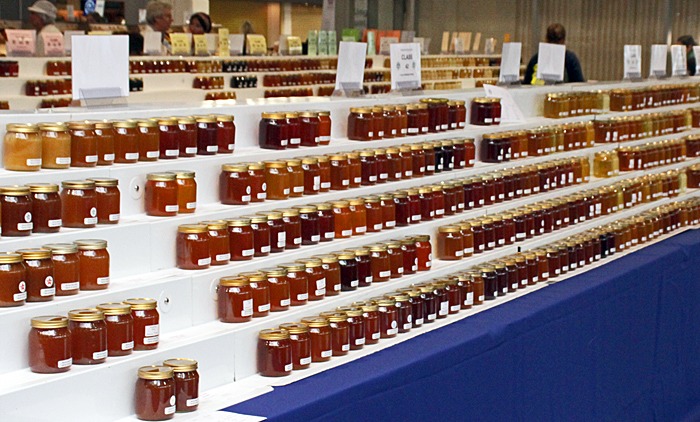 Jars of honey
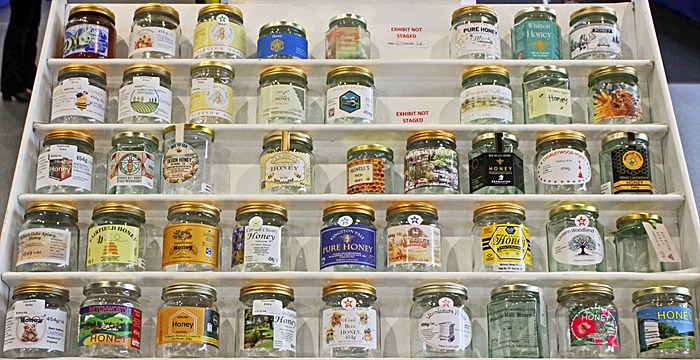 Labelled honey jars
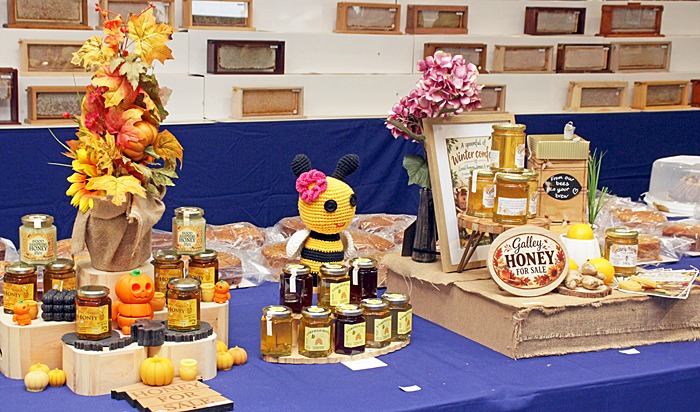 Honey for Sale
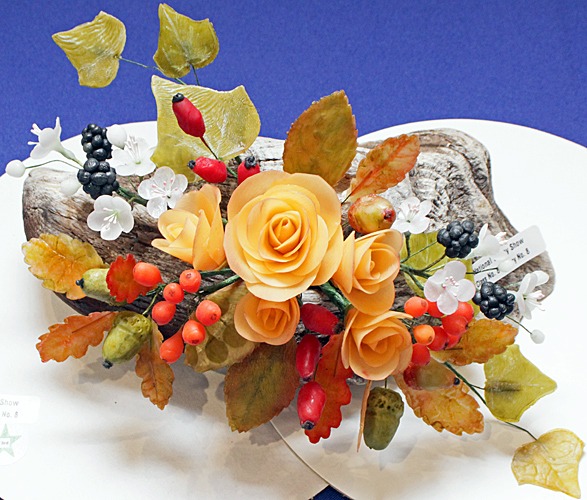 Beeswax flowers
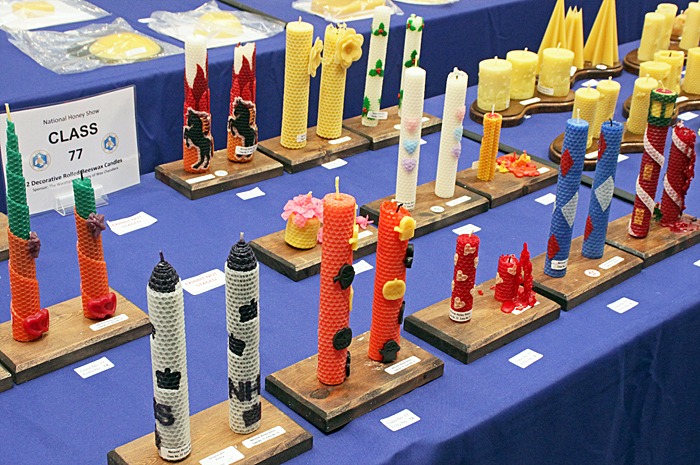 Beeswax candles
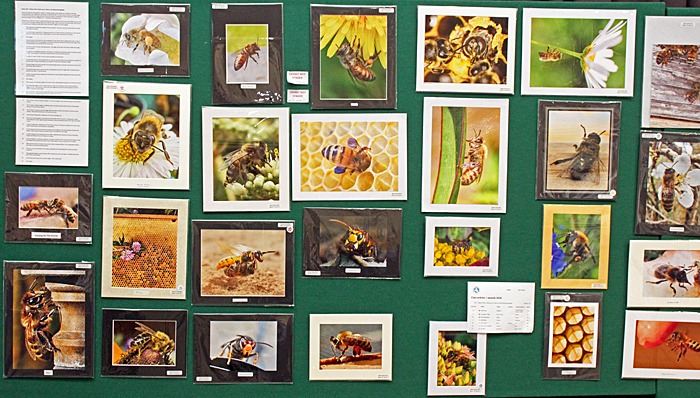 Photograph competition
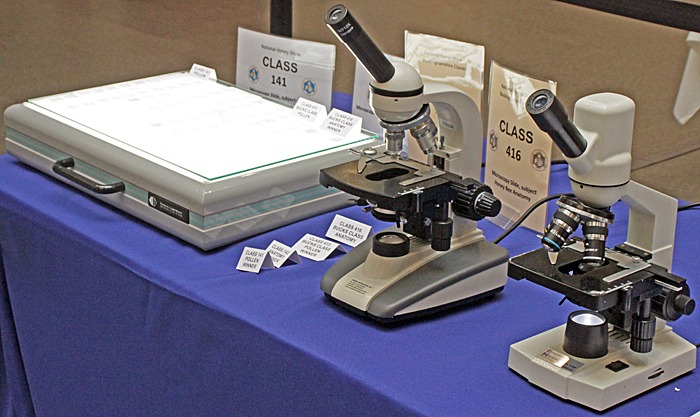 Slide competition
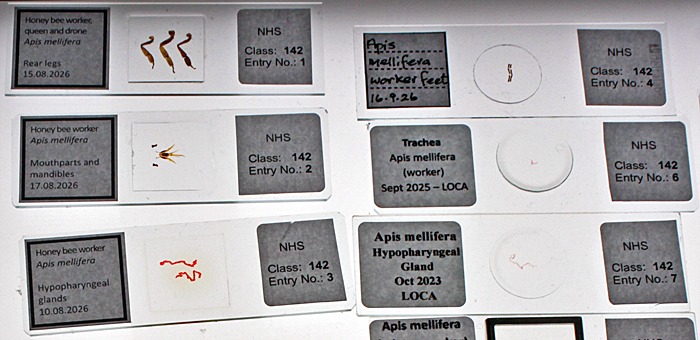 Slides
Quekett member Jonathan Palmer won a silver cup for his pollen slide.
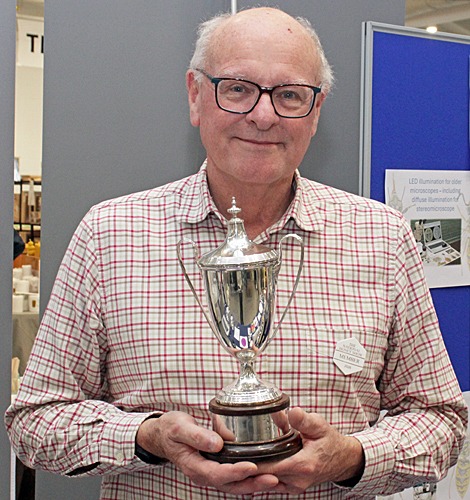 Jonathan Palmer
Trade Hall
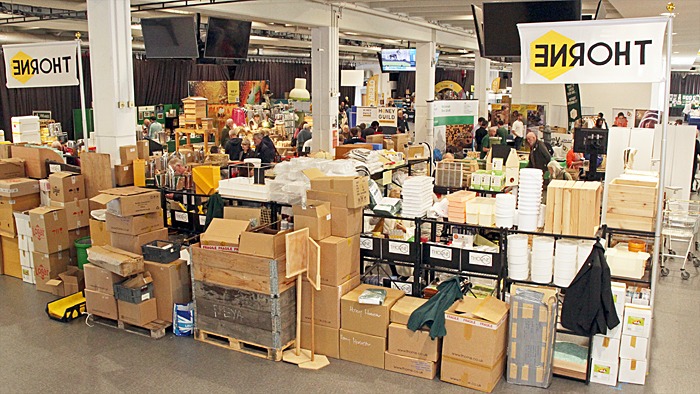
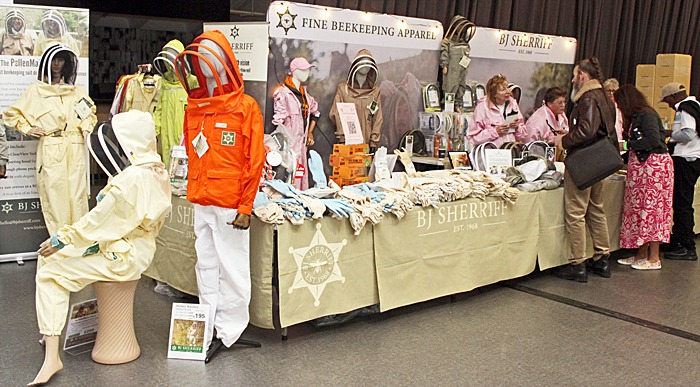
In addition to the Quekett stand, there were lots of stands in the Trade Hall where members of the public could buy almost anything a beekeeper could desire (except a microscope), browse books on bees, find out about associations to join, learn about beekeeping in developing countries and learn about pests and diseases of bees.
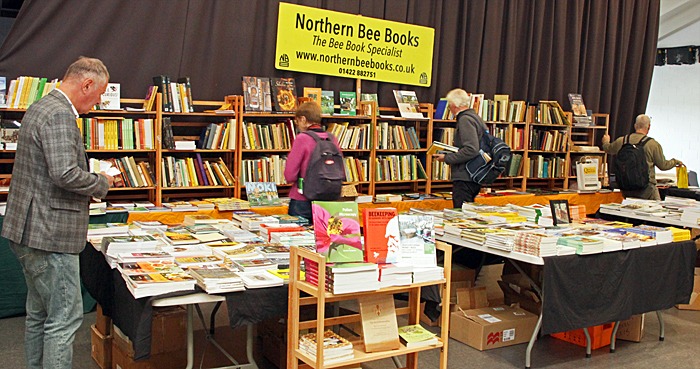
Northern Bee Books sell an amazing number of new books on honeybees, and a good selection of used books.
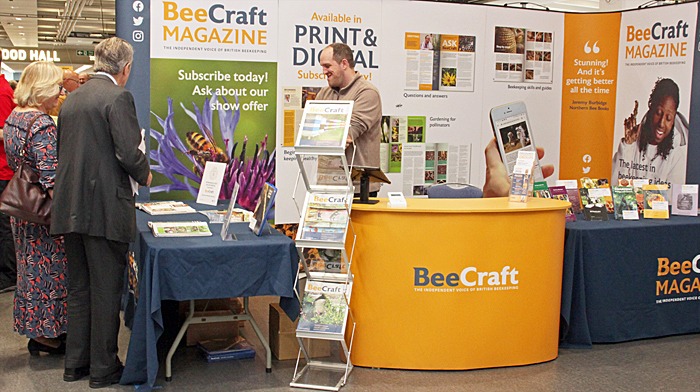
The British Beekeepers Association (BBKA) was one of several stands that were warning of the dangers of the yellow-legged hornet.
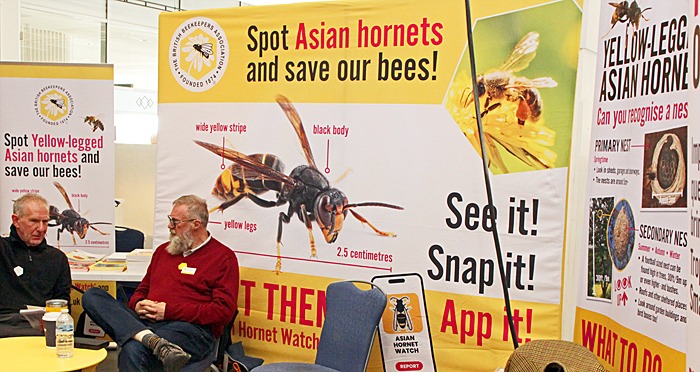 British Beekeepers Association (BBKA)
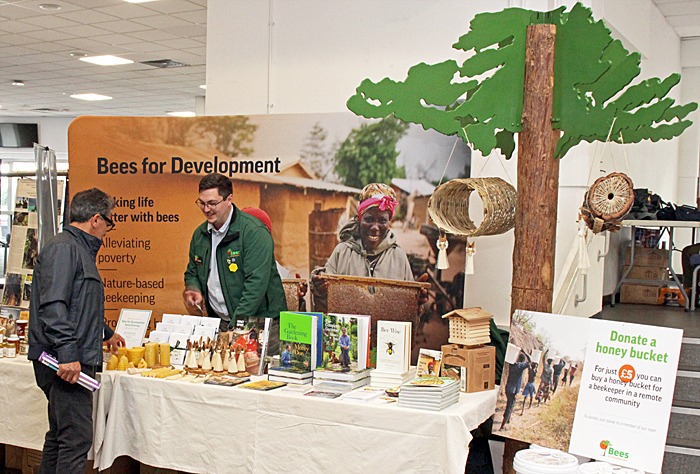
Bees for Development is a charity that makes life better with bees. They promote sustainable beekeeping to combat poverty, build resilient livelihoods and benefit biodiversity.
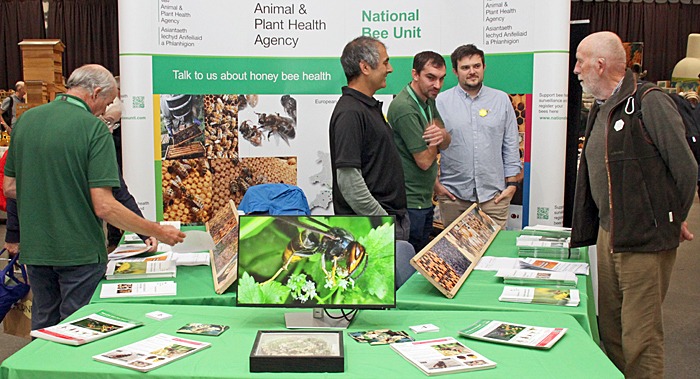
The National Bee Unit is part of the Animal & Plant Health Agency, which works to safeguard animal and plant health for the benefit of people, the environment and the economy. They are involved in the management and control of bee pests and diseases, along with training and dissemination of information to beekeepers. At the Show they were offering advice on problems including Tropilaelaps mites, the yellow-legged hornet (Vespa velutina), European foulbrood, the small hive beetle (Aethina tumida) and Varroa mites.
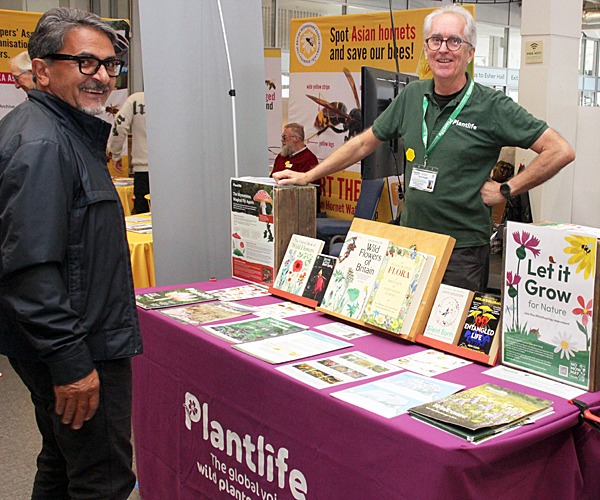
Plantlife is a charity that aims to protect and restore a wide variety of wild plants and fungi in our towns, cities and countryside, across grasslands, mountains, woodlands, coasts, heathlands, farmland and peatlands.
Meadow In My Garden sells a range of flower meadow seed products designed to foster a wildlife-friendly environment, and gives talks and seminars for horticultural clubs, beekeepers groups, garden shows, festivals, green events, civic societies, colleges and schools.
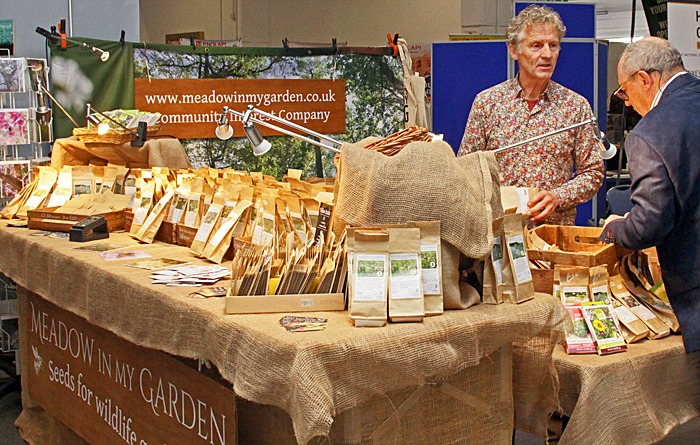
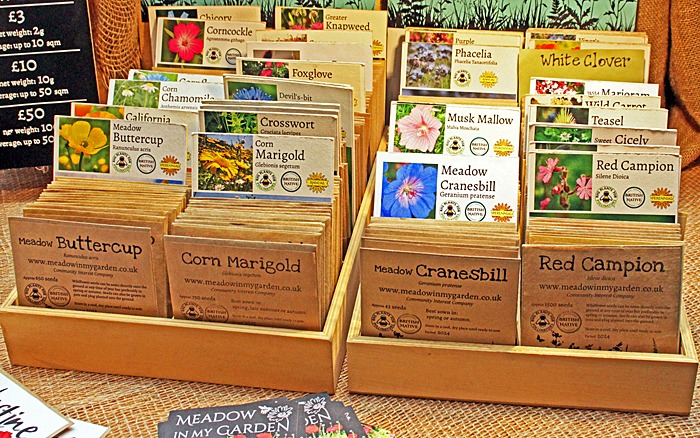 Wild flower seeds
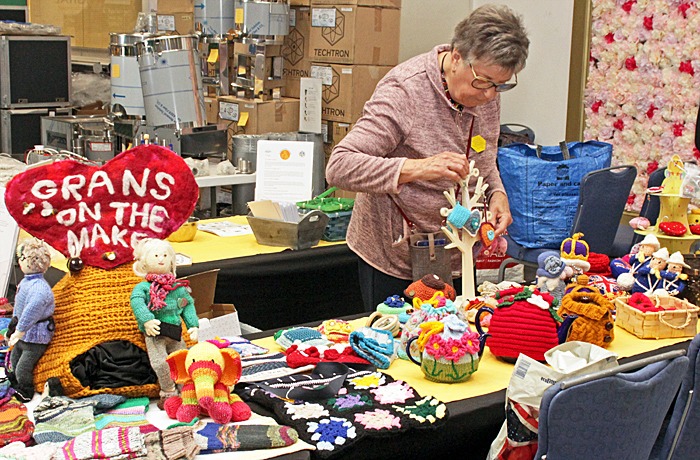
Grans on the Make knit all sorts of small items and sell them to raise money for charities.
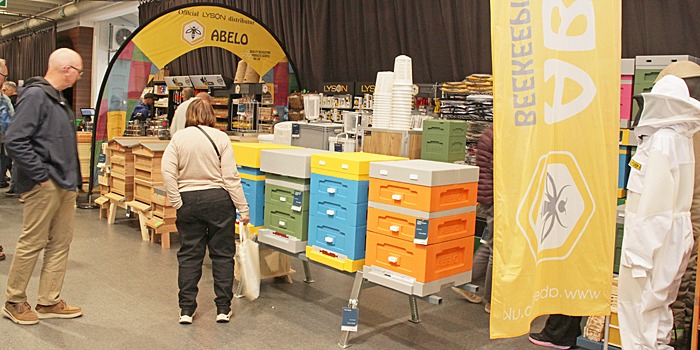
There were also stands selling beehives, protective clothing, jars, jar fillers and probably everything else that a beekeeper could want (except a microscope).
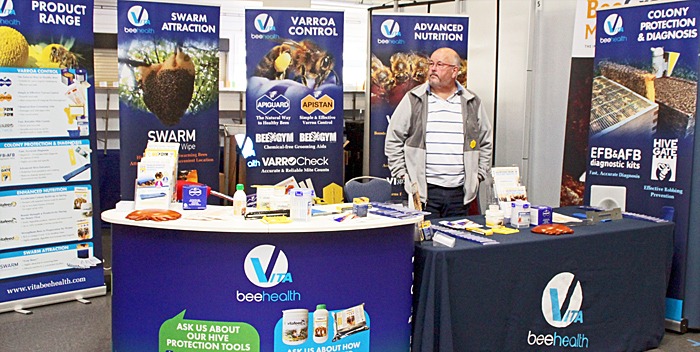
Vita Bee Health sells products to protect colonies, increase honey production and control Varroa.
Workshops
The Show included workshops on a wide range of topics, including three on microscopy by Sean Stephenson (Disease Testing and Abdominal Dissection, Preparing Bee Anatomy Slides, and Preparing Pollen Slides), one by Marin Anastasov (Honey Bee Anatomy) and one by Richard Rickitt (Photographing Bees)
The next National Honey Show will be held at Sandown Park Racecourse from Thursday 21st to Saturday 23rd October 2027, and we are planning to be there again.
Report and most photographs by Alan Wood